

sinensis


 1
9.9
1
9.9
- noun
- /sɪˈnɛn.sɪs/
- Specialized
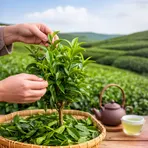
- Camellia sinensis leaves are naturally green, just like many other plants.
- Miscanthus sinensis
Examples
-
Consumption of green tea (Camellia sinensis) is popular worldwide.
Academic text (2017) -
Despite the fact that the colors are different, both of them are taken from a plant known as Camellia sinensis.
Blog text (15) -
Manufacturers process C. sinensis leaves three different ways to produce the three major classes of teas known as green, black, and oolong.
Academic text (2003) -
This highlights the restorative healing capability of Camellia sinensis.
Blog text (15) -
The age-old Camellia sinensis plant is the source of all nonherbal teas.
Academic text (2003) -
The steamed leaves of the Camellia sinensis plant (the scientific name for green tea) were used as a local remedy.
Blog text (30) -
The British became addicted to the carefully processed leaves of Camellia sinensis, or Chinese tea (originally, China was the only exporter).
Academic text (1993) -
All true teas are derived from the plant known as Camellia sinensis.
-
Oolong tea comes from the Camellia sinensis plant, which is native to China.
-
The scientific name Camellia sinensis indicates that this tea plant originates from China.
Compounds

- Specialized
A small endangered alligator from the Yangtze valley in China with toes that are not webbed

- Specialized
A tropical shrub or small tree with large red flowers grown for decoration and often called the China rose


- Specialized
A tree from China and Japan with a rounded top, dark green leaves, and many fragrant creamy-white flowers
Surface Forms
Etymology
Sinensis is a Latin word meaning 'from China', from Sinae 'China'. In scientific names sinensis shows that a species comes from China, for example the tea plant Camellia sinensis.