
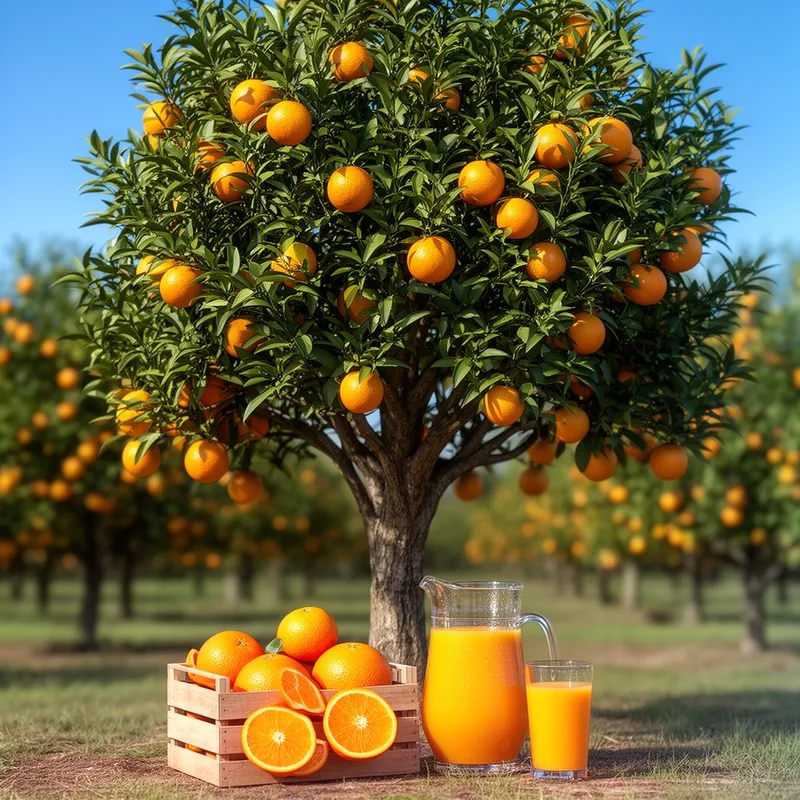
Citrus sinensis
- noun
- /ˈsɪtrəs sɪˈnɛn.sɪs/
- Specialized
- Juice made from Citrus sinensis is enjoyed worldwide for its sweet flavor and high vitamin C content.
Examples
-
The majority of commercial oranges are produced by Citrus sinensis plantations in subtropical regions.
-
Researchers studied the growth patterns of Citrus sinensis under varying irrigation methods.
-
The Citrus sinensis tree thrives in warm climates.
-
Do you like the taste of Citrus sinensis?
-
Juice made from Citrus sinensis is enjoyed worldwide for its sweet flavor and high vitamin C content.
-
The majority of commercial oranges are produced by Citrus sinensis plantations in subtropical regions.
-
The Citrus sinensis tree thrives in warm climates and is often used in home gardens.
Synonyms

 43
1.0
43
1.0

A tree that grows round sweet fruits you peel
 4
1.0
4
1.0
A tree that grows round sweet fruit you can eat

A tree that grows sweet oranges used for eating and making juice
How Mature


Surface Forms
Morphology
The binomial combines 'Citrus' (a genus of fruit trees) with 'sinensis' (a Latin species epithet), so a learner who knows the constituents can infer it refers to a type of citrus plant. However, identifying it specifically as the 'sweet orange' requires botanical or lexical knowledge beyond basic constituent meanings and familiarity with Latin names, so the relation is only partially predictable to a B1 learner.
Etymology
The Latin name Citrus sinensis gives a clear picture. Citrus names the citrus fruit group and sinensis means 'from China', because people long ago thought the 'sweet orange' came from China, so the name points to the tree we now call the 'sweet orange'.