
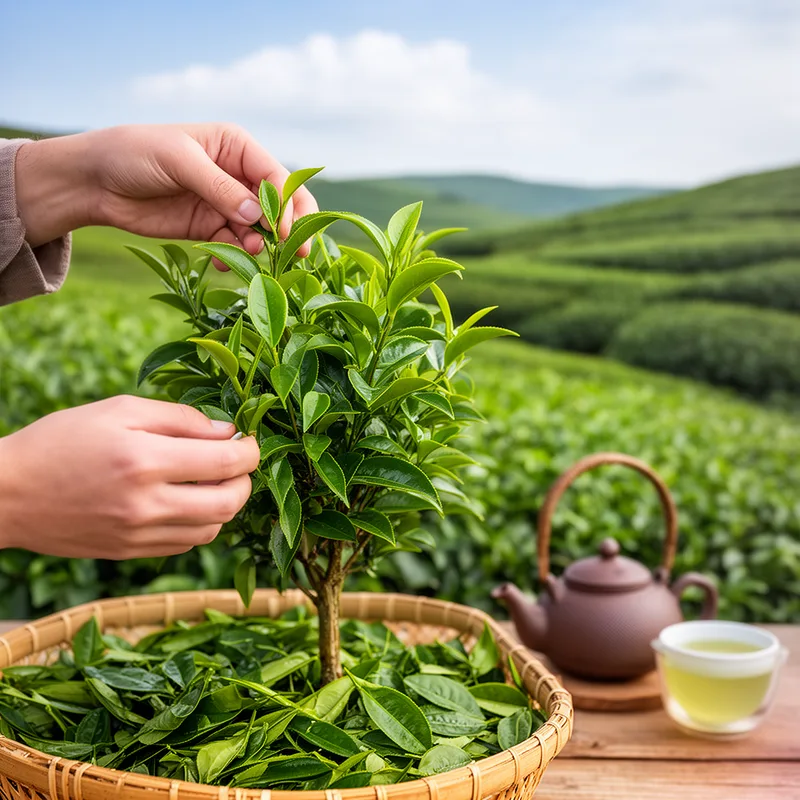
Camellia sinensis
- noun
- /kəˈmiliə sɪˈnɛnsɪs/
- Specialized
- The age-old Camellia sinensis plant is the source of all nonherbal teas.
- Camellia sinensis, the Chinese tea
- Camellia sinensis plant
- leaves of Camellia sinensis
Examples
-
Despite the fact that the colors are different, both of them are taken from a plant known as Camellia sinensis.
Blog text (15) -
Consumption of green tea (Camellia sinensis) is popular worldwide.
Academic text (2017) -
This highlights the restorative healing capability of Camellia sinensis.
Blog text (15) -
The steamed leaves of the Camellia sinensis plant (the scientific name for green tea) were used as a local remedy.
Blog text (30) -
The British became addicted to the carefully processed leaves of Camellia sinensis, or Chinese tea (originally, China was the only exporter).
Academic text (1993) -
The leaves of Camellia sinensis are harvested to produce the popular beverage known simply as tea.
-
All true teas, including green and black tea, are made from the leaves of the Camellia sinensis plant.
-
Many tea varieties originate from the Camellia sinensis shrub, which is cultivated for its flavorful leaves.
Synonyms

 22
1.0
22
1.0

A tropical evergreen shrub with leaves used to make a hot drink
Surface Forms
Morphology
The binomial name combines the genus 'Camellia' (a shrub, some species used for tea) with the epithet 'sinensis' ('from China'), so a learner who knows both constituents can infer it denotes a Camellia species originating in China—effectively the tea plant. Scientific Latin names are compositional and used cross-linguistically, so the meaning is derivable from the parts rather than idiomatic.
Etymology
The name Camellia sinensis comes from two parts: Camellia was named after a plant expert called Kamel, and sinensis is Latin for 'from China'. So the name paints a simple picture: the tea plant 'from China', which explains why its leaves are used to make tea.