

sine curve


 1
6.8
1
6.8
- noun
- /saɪn kɜrv/
- Specialized
- What are the inputs that you need to know to figure out how big how, what the amplitude of that sine curve is, how big the wiggles are?
Examples
-
This again will be a a sine curve on both sides.
-
Likely, they are distributed along a sine curve; few on the far ends, most clumped around a single position.
Blog text (31) -
It's just like the sine curve but faster.
-
There is the set of sine curves that make up the capital Dome in its sections.
-
The oscillograph showed a normal sine curve.
Fiction book (1992) -
How can sine curves be made in Inkscape?
Blog text (26) -
The graph of the sine function produces a smooth sine curve that oscillates above and below the x-axis.
-
An example of a sine curve can be seen when modeling sound waves, which fluctuate in a wave-like pattern.
-
The artist used the shape of a sine curve to represent the rhythm and flow in her painting.
Synonyms
 3
5.1
3
5.1
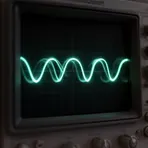
A smooth repeating wave that goes up and down in a regular curved line
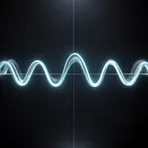
A smooth repeating wave like a sine curve used to show oscillations
Surface Forms
Morphology
The compound meaning 'a curve representing the sine function' is directly and compositionally derived from 'sine' (the trigonometric function) + 'curve' (a plotted bent line). This is a technical, cross-linguistically common mathematical term, so a B1 learner who knows both constituents would readily understand it.
Etymology
Sine curve: The name sine curve comes from an old word for a 'bay' or 'fold', giving the idea of a smooth bend. When you draw it, the line goes up and down like waves, so sine (the bending idea) and curve (the line) help us remember it means a smooth, wave-like graph.