

sine
 9
6.7
9
6.7

- noun
- /saɪn/
- Specialized
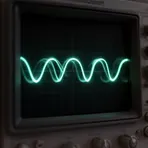
- The peak-to-peak voltage of the sine wave was verified using a digital voltmeter and oscilloscope.
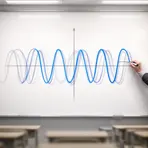
- sine wave
- sine function
- sine and cosine
Loading YouTube…
Watch on YouTubeSo you will use those to evaluate sine, cosine, and tangent.
- So you will use those to evaluate sine, cosine, and tangent.
- More likely you have to replace sine squared with a half angle identity.
- The integral of sine is negative cosine.
- And so this ratio is just one over sine of Theta.
- For example if you will take sine or cosine it is coefficient of say Fourier expansion.
- Any periodic function can be represented by a sum of sines and cosines of different periods, amplitudes and phases.
Examples
-
Take the inverse sine to calculate the angle. Pre-formatted table Step 5.
Academic text (2011) -
The integral of sine is negative cosine.
-
What is the average value of that sine function?
-
Now you would think the sine wave would look clean, but not quite.
-
When you go below the X axis, sine is negative, right?
-
It's the product of sine of the angle and gravity divided by mass.
-
So you could use XN plus one equals sine X for example.
-
The force here will be T times sine Theta plus delta Theta.
-
Sine A equals BC over AB equals the perpendicular over the hypotenuse.
-
In a right triangle, the sine of an angle is the ratio of the length of the opposite side to the length of the hypotenuse.
Synonyms
 9
8.1
9
8.1
The number you get when you divide the side opposite an angle by the longest side in a right triangle
Idioms


Compounds




Surface Forms
Etymology
Sine has a long history: an old Sanskrit word jya-ardha meaning 'half-chord' was written in Arabic as jayb ('fold' or 'pocket'), and Latin used sinus ('bay' or 'curve'), which became the modern sine. So sine is named for the curved wave or 'fold' the function makes on a graph, and that image can help you remember its meaning.