

to shear
 6
8.2
6
8.2

- verb
- /ʃɪr/
- Specialized
- One force is caused by stretching or shearing parallel to the interface between the skin and the skin layers below.
Loading YouTube…
Watch on YouTubeI was thinking it would somehow shear out and and it didn't.
- I was thinking it would somehow shear out and and it didn't.
Examples
-
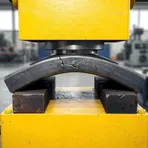
During testing, the metal would shear under strain, indicating it was not suitable for the project.
-
As the tectonic plates shifted, they sheared along the fault line, causing an earthquake.
-
Vectors that are here kind of shear over a little bit.
-
But suppose you keep shearing, eventually would end up with the situation where the cell is highly deformed.
-
I heard the sound of objects rattling in the dark, and sirens, and then a shearing sound as the wind increased.
Fiction book (2000) -
Most of these fish slowly became extinct as Antarctica sheared away from the rest of Gondwanaland and gradually cooled.
Academic text (1992) -
The materials began to shear under the intense pressure, leading to structural failure.
Synonyms
 3
4.2
3
4.2
To change the shape of something by putting force on it
Compounds

- Specialized
How well a material returns to its original shape after a sideways force
How Deformed

Surface Forms
Etymology
Shear comes from an old German word meaning 'to cut', and we use it as a verb when parts of an object slide or break under force, almost as if the object is being cut apart. So when a bolt or rock 'shears', it is deformed or split by that sliding force.