
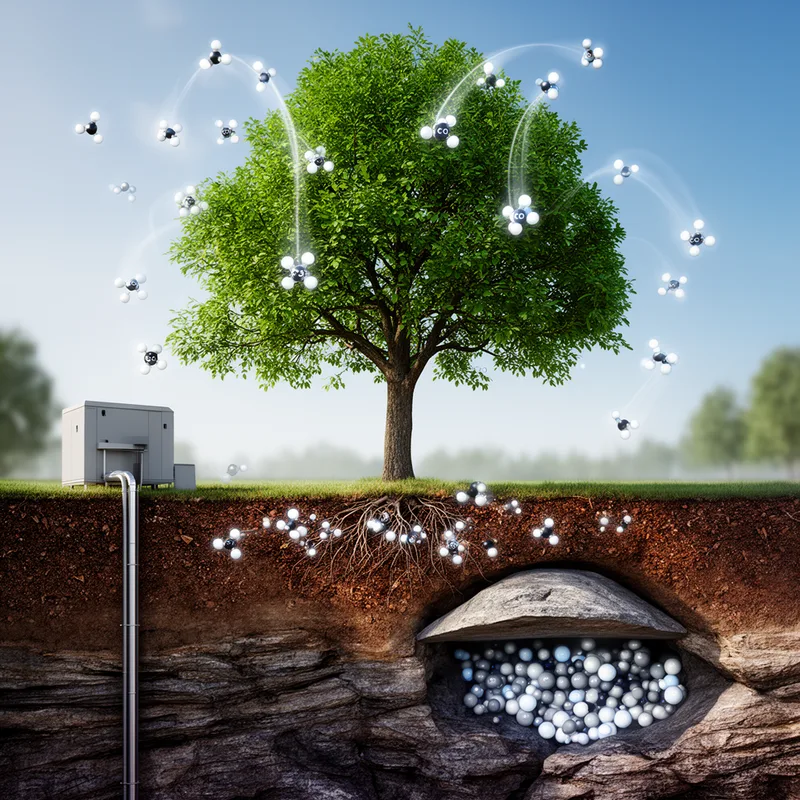
to sequester
 4
7.0
4
7.0

- verb
- /sɪˈkwɛstər/
- Specialized
- " We're examining ways for growers to sequester carbon and, perhaps, one day earn money from doing so.
- sequester carbon
- sequester CO2
- capture and sequester
Loading YouTube…
Watch on YouTubeAnd finally there's the oceans and nothing sequesters carbon faster than kelp.
- And finally there's the oceans and nothing sequesters carbon faster than kelp.
- So it's true that you can sequester some carbon.
- It needs to sequester carbon in a drought condition and in a flood.
Examples
-
Root growth levels off, but the soil continues to sequester carbon for about a century.
Academic text (2007) -
Some terrestrial ecosystems (such as forests) and the oceans tend to sequester carbon emissions, acting as "carbon sinks."
Academic text (1998) -
Just like plants on land, they sequester carbon dioxide out of the atmosphere and they bring it into organic materials in the ocean.
-
Trees, like all growing vegetation, sequester carbon dioxide and thereby help to reduce global warming.
Academic text (1997) -
During the first decade, they built up an immense carbon-sequestering root system.
Academic text (2007) -
Deep-rooted cover crops sequester carbon, cycle nutrients, and draw nitrate from far down in the soil.
Academic text (2006) -
It's an ancient soil amendment now being touted as a way to combat climate change by sequestering carbon underground.
Academic text (2013) -
The key to the forests' superior carbon-sequestering capability lies beneath the pillowy mounds of mosses that carpet the forest floor.
Academic text (2001) -
Trees, like all growing vegetation, sequester carbon dioxide and thereby help to reduce global warming.
-
Forests and peatlands, in particular, can sequester several hundred gigatons of CO2 from the atmosphere.
Antonyms

How Captured

Surface Forms
Etymology
Sequester comes from the Latin sequestrare, meaning 'to set aside'. So when scientists say forests or soils sequester carbon, they mean these systems take carbon from the air and keep it 'set aside' in wood, soil, or rock.