

to salinize
- verb
- /ˈseɪlɪnaɪz/
- Specialized
- Before refrigeration, people would salinize meat to keep it from spoiling.
Examples
-
They salinized the fish to preserve it.
-
The chef decided to salinize the fish before cooking it over the fire.
-
Farmers sometimes salinize vegetables to preserve them for the winter months.
-
We need to salinize these vegetables before canning.
-
Before refrigeration, people would salinize meat to keep it from spoiling.
-
The chef decided to salinize the fish before cooking it over the fire.
-
We need to salinize these vegetables before canning.
Synonyms

 65
3.2
65
3.2

To stop food from going bad so it lasts longer
 31
1.0
31
1.0
To put small white crystals on food to make it taste better or last longer
 26
4.6
26
4.6
Preserve food, for example by drying or salting
 8
4.8
8
4.8
To soak food in very salty water to keep it and add flavor


 1
7.2
1
7.2
To make something salty by adding salt

To keep meat or fish from spoiling by salting
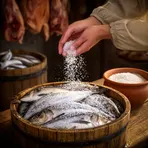
To add salt to food, often to preserve or flavor it
How Salty

Surface Forms
Morphology
salinize = saline (semi-transparent) = salin + ize
Formed from 'saline' + '-ize' meaning 'to make salty'; the derivation is regular but relies on the less common adjective 'saline'.
Etymology
Salinize comes from the Latin root sal, meaning 'salt', the same root you see in salt and saline. So, to salinize food is to 'make it salty' to preserve it, much like salting meat to keep it from spoiling.