
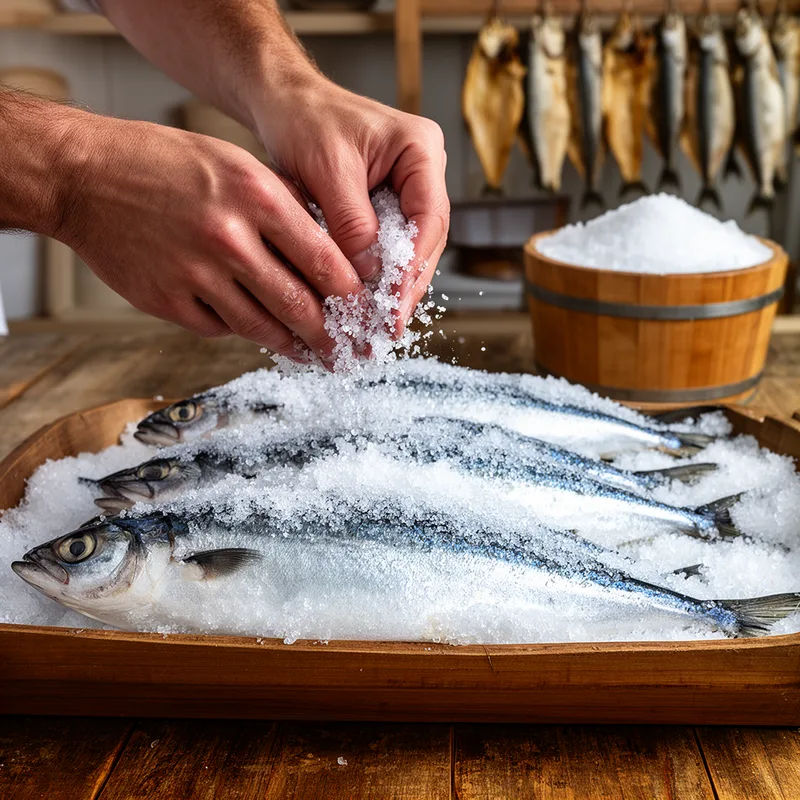
to dun
- verb
- /dʌn/
- Archaic
- In the old days, fishermen would dun cod to preserve it for winter.
Examples
-
After catching the herring, they dunned the fish to keep them from spoiling.
-
She dunned the meat before cooking it.
-
A dunned piece of meat can last for months without refrigeration.
-
They decided to dun the fish for a week.
-
After catching the herring, they dunned the fish to keep them from spoiling.
-
A dunned piece of meat can last for months without refrigeration.
-
She dunned the meat before cooking it.
Synonyms

 21
1.0

To put small white crystals on food to make it taste better or last longer
 5
4.6
Preserve food, for example by drying or salting


 1
7.2
To make something salty by adding salt
 1
9.0
To preserve meat by using salt
 1
9.9
To add salt to food, often to preserve or flavor it
To preserve food by adding salt so it lasts longer
Compounds

How Preserved

Surface Forms
Etymology
Dun meaning to cure meat or fish by salting comes from an older use of the word that meant 'to make dry or dark', so to dun food was to preserve it until it turned darker and kept longer.