
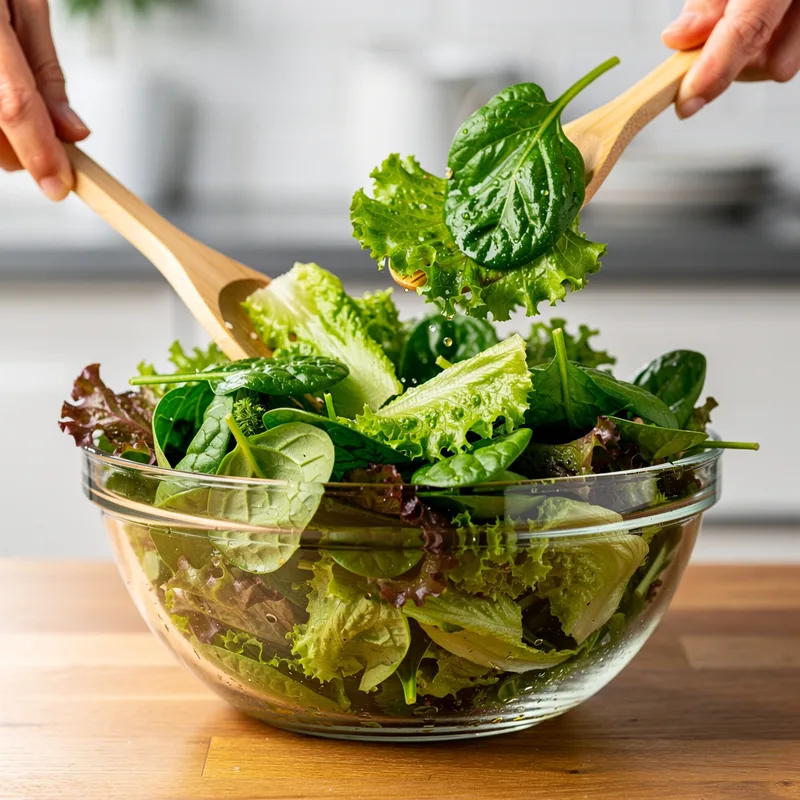
salad greens
 1
1.1
1
1.1

- noun
- /ˈsæləd ɡriːnz/
- Nice salad greens.
- cups of salad greens
- mixed salad greens
- wash salad greens
Examples
-
7 ounces of salad greens
Blog text (4) -
This is like the equivalent of buying a bag of salad greens for half or less of the price.
Blog text (19) -
Plate the salad greens on a serving dish or large bowl.
Blog text (4) -
Nice salad greens.
-
I will say that the homemade salad dressing (a mango-vinaigrette) was really delicious on my salad greens.
Blog text (23) -
They can be used just like spinach or any other salad green, but in in late spring, we can actually use the dandelion flowers to make tea.
-
Wash and dry the salad greens before mixing them with other ingredients.
-
In a large bowl, toss the salad greens with a light vinaigrette to enhance their flavor.
-
For a healthy meal, include fresh salad greens such as spinach, arugula, or lettuce.
Synonyms
 94
1.0
94
1.0
A green leafy vegetable eaten raw or cooked
 93
1.0
93
1.0
A leafy green vegetable often eaten raw in salads
 11
1.0
11
1.0
Leaves and stems of plants like spinach or kale eaten as vegetables
 3
2.8
3
2.8
A long, crisp vegetable with dark green leaves used in salads
 2
2.5
2
2.5
A plant food with green edible leaves like spinach or lettuce

A leafy vegetable like lettuce or spinach eaten raw in salads

A leafy green with a slightly spicy taste often eaten raw in salads

Green leaves that grow wild and people collect to eat
Surface Forms
Morphology
The meaning 'leafy vegetables used in salads' is directly derivable from combining 'salad' (a dish of raw vegetables) with 'greens' (leafy vegetables). This is a straightforward modifier + noun composition found across languages and follows normal English noun-noun modification, so a B1 learner who knows both words will readily understand it.
Etymology
The compound noun salad greens creates a clear kitchen image: a bowl of fresh green leaves for a salad, with greens meaning the leafy vegetables. So, salad greens means the leafy vegetables you eat 'raw', like lettuce or spinach.