

rhubarb
 14
3.5
14
3.5

- noun
- /ˈruːbɑːrb/
- I'm baking a rhubarb pie to bring over to Ally's family tonight.
- rhubarb pie
- strawberry and rhubarb
- rhubarb tart
Loading YouTube…
Watch on YouTubeWhat were those drinks with the with the rhubarb liqueur?
- What were those drinks with the with the rhubarb liqueur?
Examples
-
Wouldn't this be a good time for a piece of rhubarb pie?
-
I made a delicious rhubarb pie using fresh stalks from the garden.
-
Inside, you will find a rhubarb pie.
Fiction book (1993) -
I like that rhubarb pie that Martha makes.
-
Let's go get some strawberry rhubarb with ice cream.
-
"My strawberry rhubarb pie is better than this."
Fiction book (1993) -
My favorite was something Mother called Rhubarb Betty, which was sort of an upside-down cake with the rhubarb on the bottom.
Fiction book (1990) -
Bernie will make a special rhubarb tart.
Fiction book (1998) -
We spent the afternoon making a strawberry-rhubarb pie, sipping iced tea in the shade, and reading.
Fiction book (1993) -
With its gemlike strawberries and ruby stalks of rhubarb, this pie has marked many special occasions since then.
Blog text (2)
Synonyms
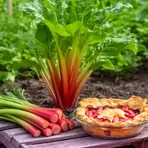
A plant with thick stems you can eat, often used in pies
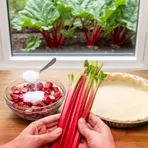
A plant with long sour stalks usually cooked with sugar and used in pies
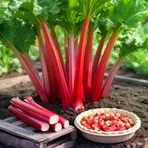
A plant with thick edible stalks often used in cooking like pies

A plant with tart edible stems that people cook and eat in pies

A plant with thick red or green stalks that taste tart and are cooked in pies
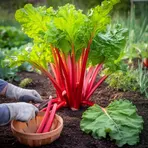
A garden plant that grows back every year with thick stalks you cook and eat but poisonous leaves
Compounds


- Indian
A large mountain plant with thick roots used in traditional medicine and for making yellow dye
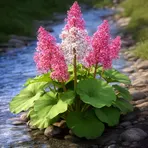
A perennial plant with large round leaves and groups of bright pink or white flowers that grows beside streams

- Indian
A herb from the Himalayas with roots used in traditional medicine and leaves like common rhubarb
A garden plant that grows back every year with thick stalks you cook and eat but poisonous leaves
Surface Forms
Etymology
Rhubarb comes from the old Greek word rhabarbaron, meaning 'root of the barbarians' because it was first known as an exotic root from the East, and that is why today we use its long, tart stalks cooked with sugar for pies and jams.