

resonance
 27
6.9
27
6.9

- noun
- /ˈrɛzənəns/
- Specialized
- No patient exhibited clinical or magnetic resonance imaging evidence of a rotator cuff tear.
- magnetic resonance imaging
- magnetic resonance
- resonance frequency
Loading YouTube…
Watch on YouTubeThe arcs from this Tesla coil are created in pulses of resonance frequency.
- The arcs from this Tesla coil are created in pulses of resonance frequency.
- LIGO listens to the resonance of space around these like orbiting mallets.
- And everyone said, well, you get resonances.
Examples
-
Magnetic resonance is climbing, holding at full capacity.
-
Magnetic resonance records all brain activity in humans and writes them to the computer.
-
You can amplify the magnetic resonance using materials on hand.
-
We would like to try a little demonstration of the effect of resonance and reverberation.
-
The feedback path has a sharp resonance peak near 7 kHz.
Academic text (1990) -
The experimenters expected one peak due to the proton resonance, but instead found six peaks in that vicinity.
Academic text (1993) -
Computed tomography (CT) and magnetic resonance imaging (MRI) are helpful in making the diagnosis.
Academic text (2008) -
The researchers used magnetic resonance imaging to study how the brain reacts to different stimuli.
-
During the lecture, the professor explained the concept of resonance and its applications in physics.
-
The musical instrument was designed to create a deep resonance that enhances the richness of the sound.
Synonyms
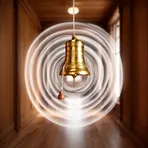
A repeating sound that continues after the first sound stops
Compounds
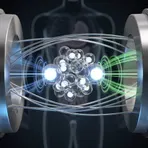
- Specialized
5
4.8
Tiny parts of atoms take in and send out energy inside a strong magnetic field

- Specialized
3
3.7
A medical test that uses strong magnets to make detailed pictures of the inside of the body
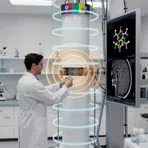
- Specialized
1
6.8
A method that uses strong magnets and radio waves to make images or study molecules
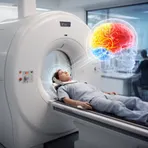
- Specialized
1
4.1
A way to see brain activity by measuring blood flow using a big machine with magnets
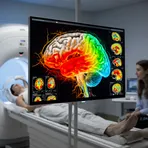
A brain scan that shows brain activity by measuring changes in blood oxygen


- Specialized
A method that uses microwaves to study how substances with unpaired electrons react to magnets

- Specialized
A technique using microwaves to study magnetic behavior of electrons in certain materials


- Specialized
A method using a strong magnet and radio waves to make images of body parts or molecules

How Strong
- Specialized
27
6.9

- Specialized
Surface Forms
Morphology
Etymology
Resonance comes from the Latin resonare, from re- 'again' and sonare 'to sound'. Imagine a glass or a machine 'sounding again' and shaking at a special pitch — that is resonance in science, when something vibrates strongly at a certain frequency.