
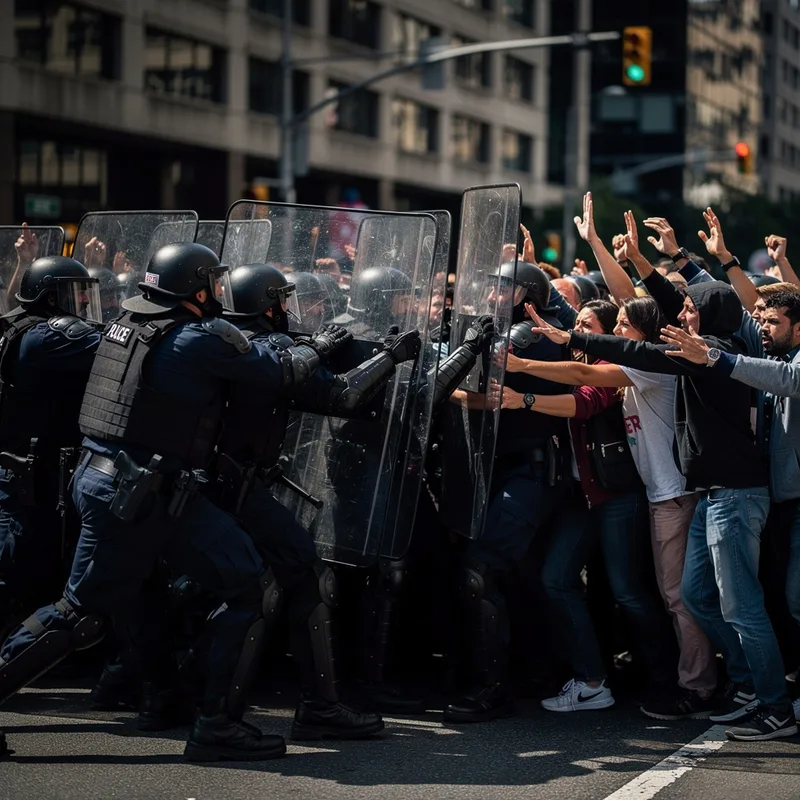
to repress
 19
6.7
19
6.7

- verb
- /rɪˈprɛs/
- The rural and urban populist opposition of the 1960s was ultimately repressed by Kenyatta.
- repress opposition
- repress dissent
- repress the movement
Loading YouTube…
Watch on YouTubeAnd they are viciously, savagely repressed by administrations.
- And they are viciously, savagely repressed by administrations.
- You can be, you know, a king or a Prince and inspire your people rather than repress them.
Examples
-
Of these elements in Paraguay, the labor unions are small, organizationally weak, and repressed by the government.
Academic text (1990) -
The Paris Commune forms and then is repressed by the the army.
-
And the French stuff, it's more like, well, the system is already there and it's, it's set up to repress us to, to keep us down.
-
I received this book at university during my time in 2020 the year when everything broke apart the state leaders came up with new regulations to repress the people and secure their power
-
Deng and other elderly leaders finally ordered the troops to repress the students.
Academic text (1990) -
They know only how to repress the people... and defend the interests of the rich oligarchy.
-
Some 50,000 troops violently repressed the protests of late August, killing dozens.
Academic text (1991) -
For the revolutionary FLN, the French ignored and repressed Algerian calls for autonomy and independence.
Blog text (4) -
While political dissent was repressed, Algeria fared better economically and socially.
Academic text (1992) -
The government used force to repress the protestors advocating for democracy.
Synonyms
 176
4.8
176
4.8
To stop public protest by force or by people in power
 152
6.5
152
6.5
To treat people cruelly or unfairly using power to limit their rights
 49
5.3
49
5.3
To hold back a feeling or reaction so it does not show
 39
3.6
39
3.6
To stop people or groups from becoming stronger
 37
5.5
37
5.5
To bring a person or thing under control, often by force
 35
7.7
35
7.7
To stop a strong feeling or a crowd causing trouble
 21
9.2
21
9.2
To bring someone or something under control, often by force
 11
7.8
11
7.8
Completely stop protests or criticism
 9
7.5
9
7.5
To stop a person or group from speaking freely
 8
8.1
8
8.1
Forcefully stop something like a protest or rumor
 3
7.6
3
7.6
Make someone or something obey after they resist

Use force to stop a rebellion or uprising

Stop something by using force or strict rules
Antonyms


How Forceful

Surface Forms
Morphology
Etymology
Repress comes from the parts re- 'back' and press 'to push'. Imagine a force that 'presses down' on people or ideas, so to repress is to put down opposition or protest by force or fear.