
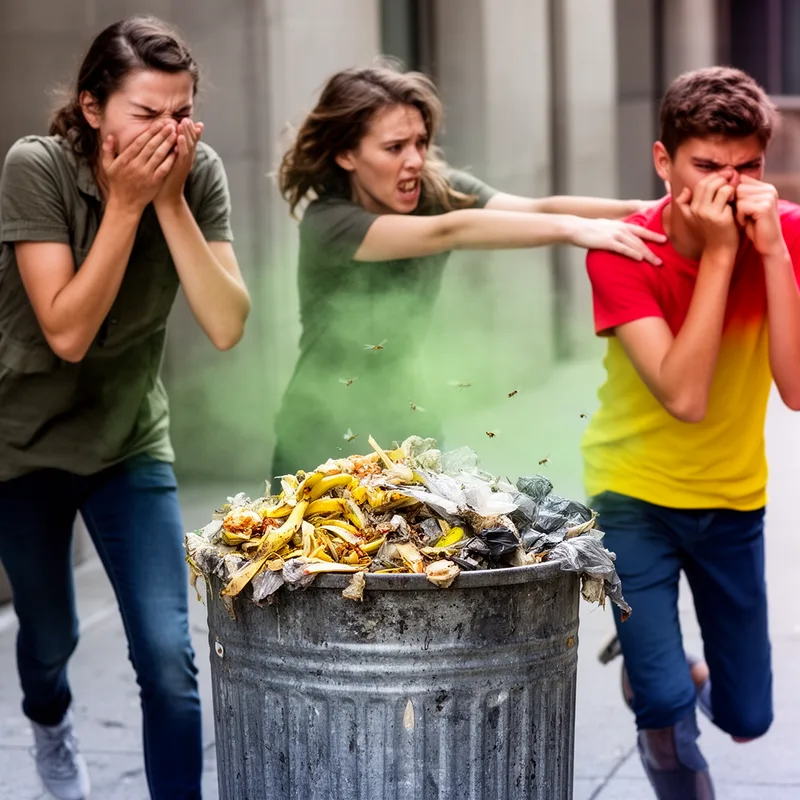
repelling
- adjective
- /rɪˈpɛlɪŋ/
- His attitude was so repelling that no one wanted to stay in the room with him.
Loading YouTube…
Watch on YouTubeWe grasp beings as such by the wholly repelling gesture, the nihilation of the Nothing.
- We grasp beings as such by the wholly repelling gesture, the nihilation of the Nothing.
Examples
-
The smell of rotten eggs is extremely repelling to most people.
-
Many find the idea of eating insects repelling and prefer traditional protein sources.
-
We grasp beings as such by the wholly repelling gesture, the nihilation of the Nothing.
-
The dangerous entangling of woman and girl prompts us to think about black girls in two interrelated and degrading ways: they are forgettable and invisible, and yet highly visible, hypersexual, and repelling.
Academic text (2013)
Synonyms

 531
1.3
531
1.3

Causing a strong feeling of dislike or making you feel sick
 59
5.5
59
5.5
Causing strong dislike or disgust, like a very bad smell
 30
4.6
30
4.6
Something that makes people feel dislike or disgust
 24
3.0
24
3.0
Having a very bad smell or taste
 23
7.7
23
7.7
Causing strong dislike or disgust because people see it as morally wrong
 22
6.8
22
6.8
Not pleasant to taste or smell
 20
7.7
20
7.7
Causing strong disgust or hatred in people
 20
6.1
20
6.1
Causing dislike and making someone not want to continue
 20
9.7
20
9.7
Very dirty, smelly and unpleasant to touch or be near
 15
5.3
15
5.3
Having a bad smell or taste that bothers you
 6
4.9
6
4.9
Very unpleasant and likely to make you feel disgusted
 5
6.1
5
6.1
Causing strong dislike or disgust
 2
4.0
2
4.0
Something that makes people feel dislike or annoyance
 1
8.4
1
8.4
Making people or animals avoid something because it is unpleasant

 1
6.4
1
6.4
Causing strong dislike or disgust

Very unpleasant and likely to make people feel disgusted

Causing a strong feeling of dislike or making people feel sick

Causing people to feel unpleasant and want to stay away
Antonyms


How Repulsive

Surface Forms
Morphology
Etymology
The word repelling comes from the old Latin parts re- 'back' and pell 'to drive', the same 'push' idea you see in propel. So something repelling 'pushes away' people or feelings and causes 'dislike' or 'disgust'.