

remnant
 104
4.2
104
4.2

- noun
- /ˈrɛm.nənt/
- After cutting the fabric, I had a small remnant left that I saved for future projects.
- a small remnant
- ancient remnants
- the last remnant
Loading YouTube…
Watch on YouTubeHow can we leave some remnants if we do destroy ourselves?
- How can we leave some remnants if we do destroy ourselves?
- He found himself struggling to shove the twitching remnants of the Android away.
- And then you notice there are little remnants of houses.
- I don't want any remnants of my old self left.
- Neutron stars are one of the remnants of supernovae.
- And then I also the remnants on my thighs.
Examples
-
Frank and Charlie sit back in their chairs, the remnants of their lunches before them.
Fiction book (1991) -
Nonetheless, a landscape with such impoverished remnants would clearly be better than one with none at all.
Academic text (1992) -
Was it all a gamble then, even that sad remnant of his promise to me?
Fiction book (1991) -
There will be a humble remnant which will seek refuge in God.
-
And a new Israel would rise from the remnant of Judah and Israel.
-
It's a remnant from colonial Indo-China.
-
To my right, I could barely see the remnants of a railroad bridge.
Fiction book (1992) -
There was no one there, though the remnants of a meal were strewn over the table.
Fiction book (1991) -
Neutron stars are one of the remnants of supernovae.
-
Remnants of the scavenger army continue to disrupt the operation.
Synonyms
 187
1.7
187
1.7
A small amount of food remaining after a meal
 184
3.2
184
3.2
A small piece broken off something larger
 179
2.1
179
2.1
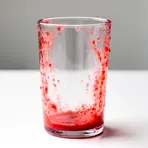
A small piece left over or thrown away
 148
4.1
148
4.1
A small amount left on something after most is removed
 102
7.5
102
7.5
A leftover piece of cloth used for sewing or crafts
 86
3.6
86
3.6
Things left after the rest is used, eaten, or taken away
 74
2.7
74
2.7
The part left after the other parts are used or removed
 23
8.4
23
8.4
A small part that remains from something that once existed
 1
6.0
1
6.0
A part left after the main part is used


 1
9.9
1
9.9
A part that remains after the main parts are removed or used

Parts left after a process or event

Small pieces of food and other things left after people eat or use them

A small piece of cloth left after making larger items

A small piece left at the very end of cloth or ribbon
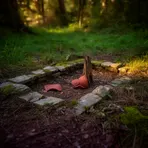
Traces or small remains of something that existed in the past
Antonyms

How Much

Surface Forms
Morphology
Etymology
Remnant comes from Latin parts re- meaning 'back' and manere meaning 'to stay', and you can see the same idea in remain and remainder. So a remnant is something that 'stays back' — a small piece left after the rest is used or taken away.