

to relieve stress
- phrasal verb
- /rɪˈliːv strɛs/
- Specialized
- To ensure the glass can withstand pressure, it's important to relieve stress through proper heating techniques.
Examples
-
The engineer used a specific method to relieve stress in the metal before shaping it into a part.
-
Before using the metal in construction, the technician must relieve stress to prevent any failures.
-
After welding, the technician heat-treated the frame to relieve stress and prevent future cracks.
-
Engineers often use vibration aging to relieve stress in assembled components before final testing.
-
The manufacturer reported that annealing successfully relieved stress in the metal shafts after forming.
-
The technician will relieve stress in the metal.
-
How do you relieve stress in materials?
Synonyms

 166
2.3
166
2.3

Make pain, stress, or worry less
 76
5.3
76
5.3
To make pain, suffering, or a problem less strong

Make a sound in a word weaker or reduce force in a part of an object
Antonyms
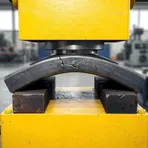

How Effective
- Specialized

 1
8.9
1
8.9

- Specialized
Surface Forms
Morphology
The verb 'relieve' clearly means 'to reduce' and 'stress' can denote pressure/tension, so the phrase literally means to reduce stress and is compositionally predictable in general use. However, the cited meaning is a specialized technical sense (internal mechanical stress in materials) that learners who only know psychological 'stress' may not recognize, making the expression only partly transparent.
Etymology
Relieve stress in engineering comes from a literal act on materials where heat or careful processing lets tight forces inside relax like a tight spring letting go. To relieve is to let that pressure out and stress is the internal force, so the phrase means 'to reduce internal pressure' so the part is less likely to crack.