
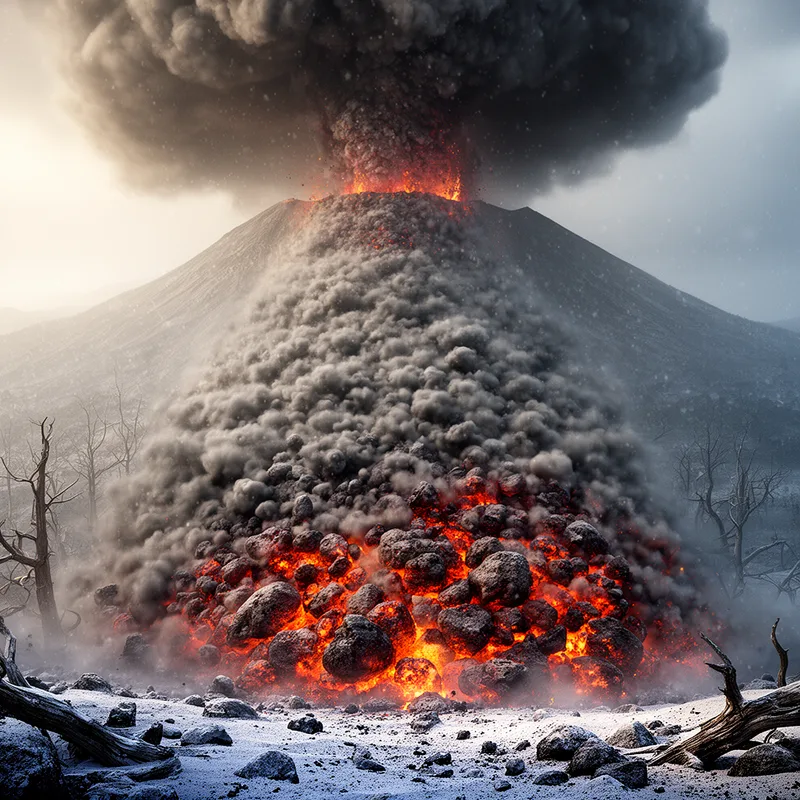
pyroclastic
 5
9.0
5
9.0

- adjective
- /ˌpaɪroʊˈklæstɪk/
- Specialized
- Excessive dental wear is caused by the fine, abrasive ash that blankets everything after a pyroclastic eruption.
- pyroclastic flow
Examples
-
Hot ash and noxious gas billow out in a wave known as a pyroclastic surge.
-
Scientists study pyroclastic deposits to understand past volcanic activity and its impacts on the environment.
-
That is a pyroclastic cloud.
-
There won't be much of a video of the shock from a pyroclastic flow...
Blog text (34) -
The ensuing pyroclastic flow is thought to have been 1.5 km high and traveling close to the speed of sound
Blog text (34) -
Ashfall, pyroclastic flows, lahars, and incandescent material affected roughly 650,000 people in Tungurahua and Chimborazo provinces.
Academic text (2017) -
Vegetation recovery on the pyroclastic flows is still minimal and consists of isolated individuals or groups of plants in favorable microsites (Del Moral and Bliss 1993).
Academic text (1997) -
Seismic activity in the Soufriere Hills volcano, beginning in 1992, resulted in an explosive eruption in July 1995, followed by a series of pyroclastic mudflows that destroyed and buried most of Plymouth, the island's capital, by 1998.
Academic text (2003) -
The devastating pyroclastic flow destroyed everything in its path during the volcanic eruption.
-
During the eruption, a thick pyroclastic cloud rose high into the atmosphere, carrying ash and rock fragments.
Synonyms
 79
3.9
79
3.9
Relating to volcanoes or the lava and ash they produce
 1
7.3
1
7.3
Actively sending out lava, ash, or gas

Relating to a sudden violent outburst like a volcano or geyser

Covered with small black pieces of burnt stone and ash, like the ground near a volcano
Surface Forms
Morphology
pyroclastic = clastic (opaque) = pyro + clast + ic
The word is built on the technical adjective 'clastic' with the prefix 'pyro-', but the volcanic geological meaning is specialized and not directly inferable for most learners.
Etymology
Pyroclastic comes from Greek parts pyro- meaning 'fire' and -clastic from klastos meaning 'broken'. So pyroclastic describes rock and ash 'broken by fire', which fits the hot fragments a volcano throws out during an eruption.