
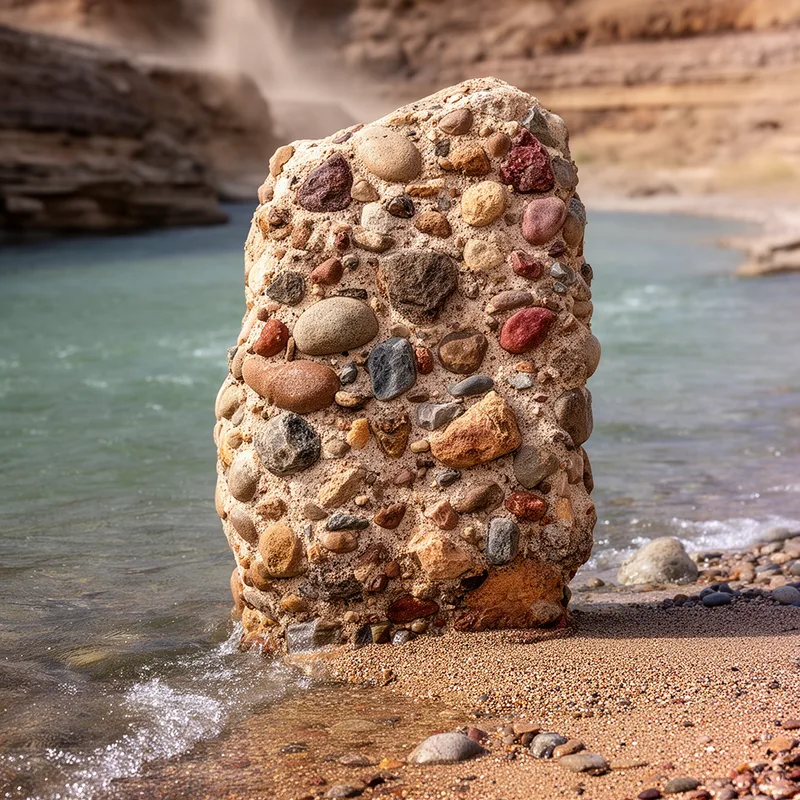
clastic
- adjective
- /ˈklæstɪk/
- Specialized
- Researchers studied the clastic deposits to understand the ancient river systems that shaped the landscape.
Examples
-
The geologist explained that the river was transporting clastic sediments from the mountains to the valley below.
-
Many oil reservoirs are found in clastic rocks that were formed from ancient river deposits.
-
Researchers identified the rock as clastic based on its composition and texture.
-
The formation contains a significant amount of clastic material such as sandstone and siltstone.
-
The clastic rocks in this area are fascinating.
-
Is this layer of sediment clastic?
-
The clastic rocks found in the area are made up of fragments from older rock formations.
Compounds

- Specialized
A rock that forms when small pieces of older rocks press and stick together
Surface Forms
Morphology
Etymology
Clastic comes from a Greek root clast- meaning 'broken into pieces'. So clastic rocks are literally made of many 'broken' bits of older rock that were moved and left in new places.

