

putrescible
- adjective
- /pjuˈtrɛsɪbəl/
- Specialized
- Putrescible food scraps in the bin began to emit a foul odor due to decay.
- putrescible material
- putrescible waste
Examples
-
For putrescible refuse, the goal was to develop a biological treatment system generating marketable compost.
Academic text (2000) -
Removing putrescible organic material prevents odors and nuisance conditions caused by the decomposition of organic material.
Academic text (2001) -
About 80.36 percent of the municipal solid waste contains putrescible materials.
Academic text (1997) -
Usually, in TSAAD facilities, the retention time of putrescible refuse is less than ten days.
Academic text (2000) -
Its annual capacity is designed for 9,000 metric tons of putrescible waste.
Academic text (2000) -
In Boras, great effort is put into source separation of refuse to achieve a pure putrescible fraction.
Academic text (2000) -
Currently, only around 160 UK sites of the 499 accepting "significant amounts" of putrescible material do so.
Academic text (1998) -
The current system could be considerably expanded to handle more putrescible materials, liquid and other food wastes, and also shredded yard trimming, solving many environmental problems in the process.
Academic text (2000) -
Municipal solid wastes in Guilan are very high in putrescible matter, which serves as a breeding medium for flies and is a source of offensive odors.
Academic text (1997) -
Despite the high percentage of putrescible materials (80 percent) in the waste stream, composting is not recommended because of the high expenditures required, the unavailability of a market for composting products in the vicinity, and the climate.
Academic text (1997)
Synonyms
 12
4.6
12
4.6

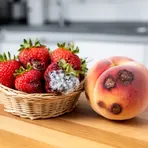
Likely to go bad quickly, especially food
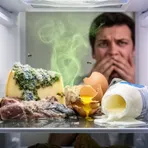
Able to rot and produce a bad smell
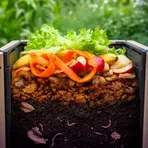
Able to rot or break down naturally

Likely to go bad and become unsafe to eat or use
Antonyms

How Perishable

Surface Forms
Morphology
putrescible = putrid (semi-transparent) = putresc + ible
The meaning 'liable to rot' is derivable via the Latin-derived combining form 'putresc-' plus the productive suffix '-ible', but the combining form is uncommon and differs in form from the familiar adjective 'putrid', so learners may only partially recognise the relation.
Etymology
Putrescible comes from the old Latin root putr- meaning 'to rot' and is related to the common word putrid. So something putrescible is 'able to rot' and will spoil or decay quickly.