
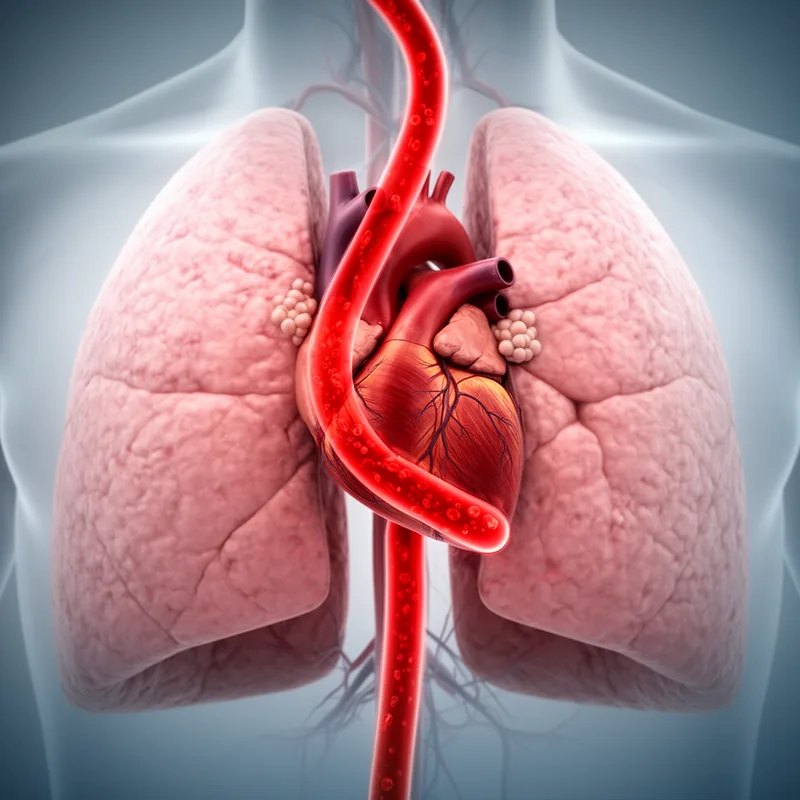
pulmonary vein
 1
3.8
1
3.8

- noun
- /ˈpʌlməˌnɛri veɪn/
- Specialized
- During this phase, no blood can enter the ventricles as the atrioventricular valves remain firmly closed; however, blood continues to flow from the vena cavae and the pulmonary veins in both the left and right atria, ready for the cycle to repeat.
Examples
-
Well, sir, there was water in his lungs, but the pulmonary vein was filled with collapsed platelets, indicative of dehydration.
-
Surgeons successfully repaired a blockage in the child's pulmonary vein.
-
Recently, it has been discovered that atrial muscle extends into the pulmonary vein area.
Academic text (2011) -
There is also an unusual shadow seen on the right side representing, very likely, an anomalously coursing pulmonary vein.
Academic text (1990) -
"We're afraid your child's pulmonary veins might not be draining into the left atrium of his heart."
Fiction book (2001) -
Cardiac missile may remain in the heart after its direct entry or after an injury to a systemic or pulmonary vein and subsequent embolization.
Academic text (2007) -
Radio-frequency energy waves are applied to form scar tissue, either by burning or freezing areas around the pulmonary veins (Figure 2).
Academic text (2011) -
Veins are blood vessels that take blood away from organs, and in this case the pulmonary veins enter into another small receiving chamber called the left atrium.
-
The pulmonary vein carries oxygenated blood from the lungs to the heart.
-
Doctors monitor the pulmonary vein to ensure proper blood flow to the left atrium.
Synonyms

A vein that carries oxygen-rich blood from the lungs to the left side of the heart
A vein in the top of a lung that carries oxygen-rich blood to the left upper part of the heart
A vein that carries blood from the upper part of each lung to the left upper chamber of the heart
A vein that carries blood from the lower part of a lung to the left atrium of the heart
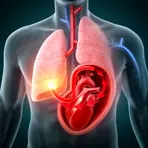
A vein that carries oxygen-rich blood from the lower lobe of a lung to the left side of the heart
Surface Forms
Morphology
The meaning is directly compositional: 'pulmonary' means relating to the lungs and 'vein' is a blood vessel returning blood to the heart, so a learner can infer it is a vein associated with the lungs that carries blood. Anatomical naming like this is common across languages, reinforcing that the sense is transparent to someone who knows both constituents.
Etymology
Pulmonary vein is a name made of two parts: pulmonary meaning 'lungs' and vein meaning a 'blood vessel' that carries blood to the heart. So the name literally pictures the veins that carry oxygen-rich blood from the lungs back to the heart.