

vena pulmonalis inferior
- noun
- /ˈviːnə pʌlˈmoʊnəlɪs ɪnˈfɪrɚ/
- Specialized
- The vena pulmonalis inferior returns blood from the lower lobes of each lung to the heart.
Examples
-
During surgery, care must be taken not to damage the vena pulmonalis inferior.
-
The vena pulmonalis inferior carries oxygenated blood from the lungs.
-
A blockage in the vena pulmonalis inferior can result in serious cardiac complications.
-
Both vena pulmonalis inferiors are essential for heart function.
-
The vena pulmonalis inferior returns oxygenated blood from the lower lobes of the lungs to the left atrium of the heart.
-
During surgery, care must be taken not to damage the vena pulmonalis inferior, as this could impact blood flow to the heart.
-
A blockage in the vena pulmonalis inferior can lead to serious cardiac complications, emphasizing its importance in the circulatory system.
Synonyms
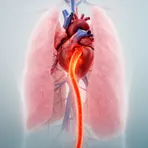
A vein that carries blood from the lower part of a lung to the left atrium of the heart
Surface Forms
Morphology
The term is directly compositional: 'vena' (vein) + 'pulmonalis' (pulmonary, pertaining to the lungs) + 'inferior' (lower), so it denotes the lower pulmonary vein. Although the label is technical and Latinized, the meaning is immediately derivable from the constituents and parallels similar anatomical constructions in other languages, making it transparent for a learner who knows the parts.
Etymology
Vena pulmonalis inferior literally names a blood vessel: vena = 'vein', pulmonalis = 'lung', and inferior = 'lower'. It helps you picture a vein carrying oxygen-rich blood from the lower part of the lung back to the heart, which is exactly what this vein does.

