
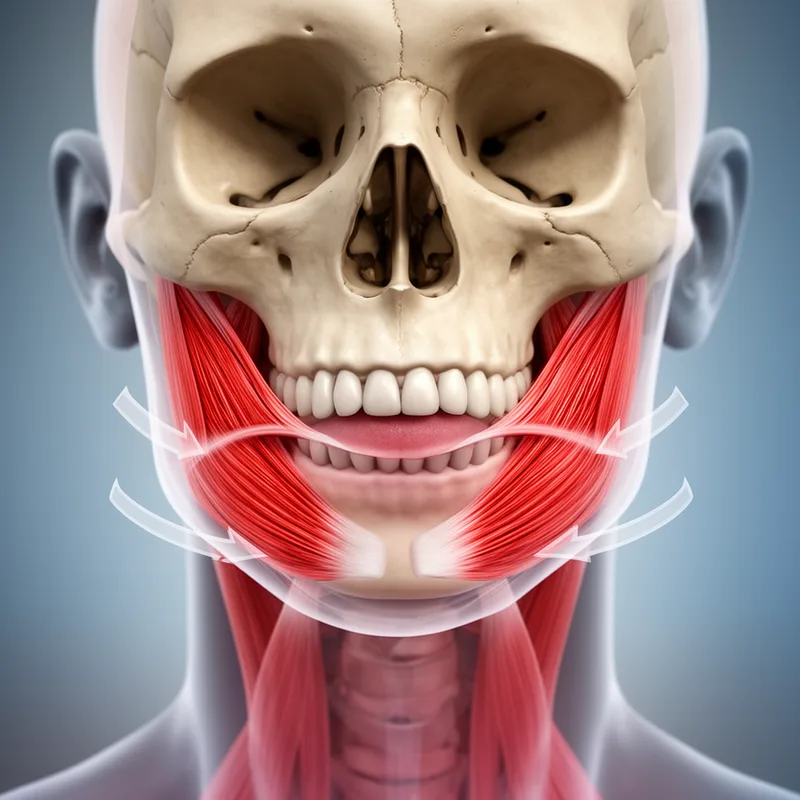
pterygoid
- noun
- /ˈtɛrɪˌɡɔɪd/
- Specialized
- The pterygoid muscles play a crucial role in moving the jaw while chewing food.
- pterygoid muscle
- masseter and pterygoid
Examples
-
The masseter, pterygoid, and temporalis muscles, as well as the eyelids and parotid glands, were also affected.
Academic text (2004) -
To help with my speech therapy, we practiced exercises that strengthened my pterygoid muscles.
-
During the surgery, the surgeon carefully examined the pterygoid muscles for any signs of damage.
Synonyms
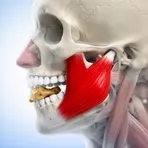
A muscle inside the face that helps move the lower jaw when you chew
Compounds

- Specialized


 1
9.9
1
9.9
A network of small veins near the jaw that collects blood from the mouth area
- Specialized
A muscle inside the face that helps move the lower jaw when you chew

- Specialized
A bony part inside the skull that sticks down to help form the nose and mouth and hold chewing muscles
Surface Forms
Morphology
pterygoid = pterygo (opaque) = pterygo + oid
Built from the combining form 'pterygo-' and '-oid'; the resulting referent (specific jaw muscles) is specialized anatomical vocabulary and not transparently inferable by an average learner.
Etymology
Pterygoid muscles are named from Greek pteryg- 'wing' and -oid 'like' because they attach near wing-shaped bones by the jaw, and that is why these muscles help move the lower jaw for chewing and speaking.