

pterygoid


 1
9.9
1
9.9
- adjective
- /ˈtɛrɪˌɡɔɪd/
- Specialized
- An injury to the pterygoid area can affect a person's ability to chew effectively due to its role in mandible movement.
Examples
-
Intrasphenoidal encephaloceles, especially those in the lateral aspect of the sphenoid sinus when this sinus has pneumatized extensively into the pterygoid recess, are exceedingly rare.
Academic text (2004) -
The pterygoid processes of the sphenoid bone provide attachment for important muscles involved in jaw movement.
-
Many studies have indicated that JNA originates in the pterygopalatine fossa at the aperture of the pterygoid canal.
Academic text (2006) -
The primitive adductor muscle for the mandible had split into two parts: the pterygoideus, which originated in the pterygoid flange, and the muscle that in mammals.
Academic text (2003) -
The upper part of the lateral surface is in contact with the submandibular fossa of the mandible and the medial pterygoid muscle below the mylohyoid ridge.
Academic text (2004) -
During surgery, the surgeon carefully navigated around the pterygoid muscles to avoid damaging them.
Compounds

- Specialized
1
9.9
A network of small veins near the jaw that collects blood from the mouth area
- Specialized
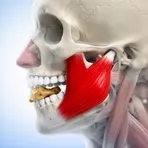
A muscle inside the face that helps move the lower jaw when you chew

- Specialized
A bony part inside the skull that sticks down to help form the nose and mouth and hold chewing muscles
Surface Forms
Morphology
pterygoid = pterygo (opaque) = pterygo + oid
The immediate base is a Greek combining form (pterygo-) not used as a standalone English word and the term is technical/anatomical, so learners cannot reliably infer full meaning.
Etymology
Pterygoid comes from the Greek root pteryg- meaning 'wing' and the ending -oid meaning 'like', so it describes parts of the sphenoid bone in the skull that look like small wings.