

pterygoid
- noun
- /ˈtɛrɪˌɡɔɪd/
- Specialized
- The fossil showed a fractured pterygoid that clarified the reptile's palate structure.
Examples
-
Researchers examined the pterygoid to understand the evolution of skull shapes in early vertebrates.
-
In some animals, the pterygoid helps support the roof of the mouth.
-
The pterygoid bone is crucial for jaw movement.
-
The pterygoids support the structure of the skull.
-
The fossil showed a fractured pterygoid that clarified the reptile's palate structure.
-
In some animals, the pterygoid helps support the roof of the mouth.
-
Researchers examined the pterygoid to understand the evolution of skull shapes in early vertebrates.
Compounds

- Specialized


 1
9.9
1
9.9
A network of small veins near the jaw that collects blood from the mouth area
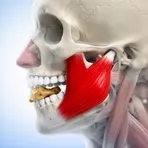
- Specialized
A muscle inside the face that helps move the lower jaw when you chew

- Specialized
A bony part inside the skull that sticks down to help form the nose and mouth and hold chewing muscles
Surface Forms
Morphology
pterygoid = pterygo (opaque) = pterygo + oid
The base is a specialized combining form rather than a common English word, and the sense (an anatomical bone) is technical and not derivable by general learners.
Etymology
Pterygoid is the name of a bone and it comes from the Greek root pteryg- meaning 'wing' and the ending -oid meaning 'like', because the bone is shaped like a wing and helps form the roof of the mouth. You may know the 'ptero' from pterodactyl, a flying dinosaur.