
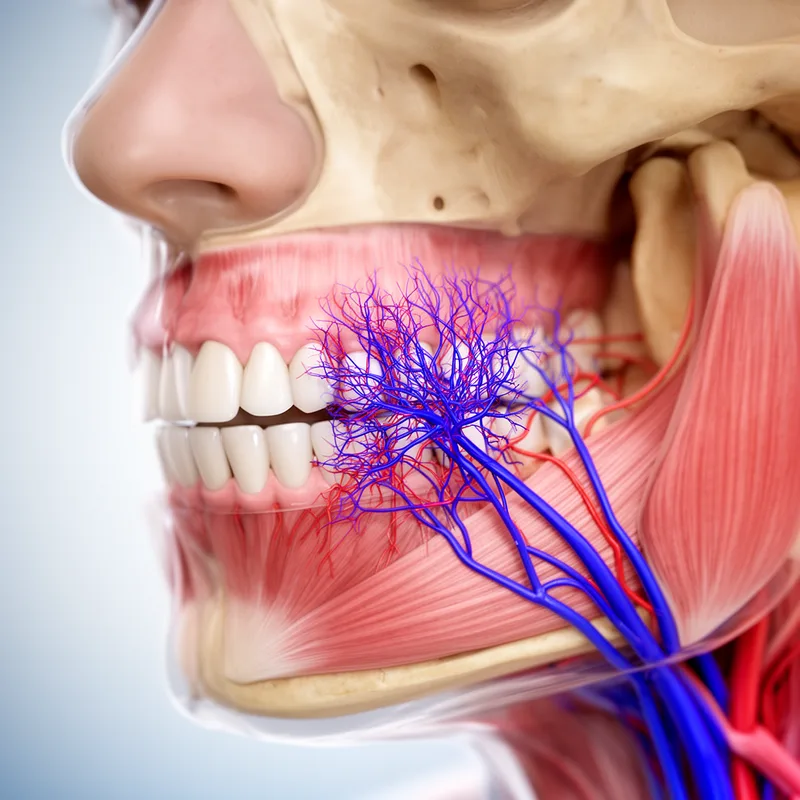
pterygoid plexus


 1
9.9
1
9.9
- noun
- /ˈtɛrɪˌɡɔɪd ˈplɛksəs/
- Specialized
- The pterygoid plexus is susceptible to injury during dental procedures involving the maxillary region.
Examples
-
Venous blood from the area around the jaw and mouth is collected by the pterygoid plexus.
-
The pterygoid plexus is essential for draining blood.
-
An infection can spread from the teeth into the pterygoid plexus, leading to potentially serious complications.
-
Surgeons must be careful near the pterygoid plexus during procedures.
-
The surgeon carefully examined the pterygoid plexus during the operation to ensure there was no excessive bleeding.
-
In dental procedures, understanding the anatomy of the pterygoid plexus is essential for avoiding complications.
-
The pterygoid plexus can become engorged in certain conditions, affecting blood flow to the surrounding muscles.
Surface Forms
Morphology
Given the definitions of 'pterygoid' (relating to the wing-shaped processes of the sphenoid) and 'plexus' (an interconnected network of vessels or nerves), the phrase directly denotes a network located in the pterygoid region; the meaning is compositionally derived from its parts. Though specialized medical terminology, the 'X + plexus' anatomical naming pattern is regular and cross-linguistically transparent, so a learner who knows both constituents can infer the MWE's meaning.
Etymology
Pterygoid plexus comes from the words pterygoid meaning 'wing' and plexus meaning 'braid' or 'network'. Imagine a small braided net of veins near the jaw like a little wing, and that image explains why the term means the network of veins that collects blood from the jaw and mouth.