

progenitive
- adjective
- /ˈprɒdʒənɪtɪv/
- Archaic
- Many species have developed progenitive strategies to enhance their chances of survival in the wild.
Examples
-
Even when read by naive literalists, the account does not insist that the progenitive couple were necessarily the aforesaid mitochondrial Eve and Y-chromosomal Adam.
Blog text (19) -
The progenitive abilities of the organisms were evident as they multiplied rapidly in their environment.
-
Plants have progenitive traits that allow them to produce seeds and ensure their species continues.
Synonyms

 139
4.5
139
4.5

Relating to making new living things like babies or young animals
 24
2.8
24
2.8
A living thing that can have many young or seeds
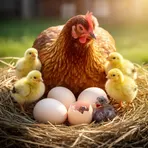 3
6.9
3
6.9
Relating to producing young
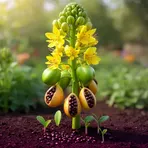 2
7.3
2
7.3
Having the ability to make or produce new things

Able to produce young or seeds

Able to have babies or produce seeds

Able to become pregnant
Antonyms


How Fertile

Surface Forms
Morphology
progenitive = progenitor (semi-transparent) = progenit + ive
Formally formed with the suffix '-ive' on a Latin-derived stem related to 'progenitor/progeny'; the structure is regular but the stem and adjective are rare, so many learners will not find it fully transparent.
Etymology
Progenitive comes from Latin parts pro- meaning 'forth' and gen- meaning 'birth' or 'to produce', and you can see the same root in generate and progeny. So to be progenitive is to have the power to create or produce, especially offspring or new things.