

prickly-leaved
- adjective
 :
con hojas espinosas
:
con hojas espinosas
- Botanists often note whether a plant is prickly-leaved when describing new species.
Examples
-
The prickly-leaved shrub made it difficult to walk through the garden barefoot.
-
Some holly species are well-known for their prickly-leaved foliage, which deters animals from eating them.
-
The prickly-leaved cactus thrived in the desert.
-
I avoided the prickly-leaved plant while hiking.
-
The gardener admired the prickly-leaved cactus for its unique shape and vibrant flowers.
-
You should wear gloves when handling that prickly-leaved rose bush to avoid getting hurt.
-
The prickly-leaved plants in the desert adapt well to the harsh environment.
Synonyms
 14
3.3
14
3.3

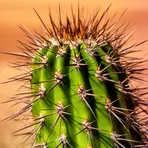
Covered with sharp points like thorns that can hurt to touch
 6
4.2
6
4.2
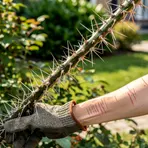
Covered with sharp points like those on rose bushes
 3
3.9
3
3.9
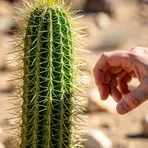
Covered with sharp points or thorns that can hurt you
 1
9.0
1
9.0
Having sharp pointed parts like thorns that protect a plant or animal

Having leaves with sharp points that can scratch skin

Having leaves with sharp points that can hurt you

Having leaves with sharp points that can hurt you

Full of thorny plants that can prick you

Having sharp, pointed parts like quills or thorns on the body
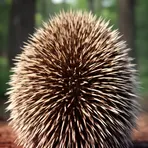
Covered with stiff, sharp spines like a porcupine
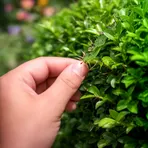
Having small sharp points that can hurt your skin
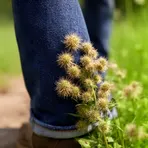
Having many small hooks or bristles that stick to clothes

Having small prickles that stick to clothes or fur

Covered with many small sharp hooks that stick to clothes or fur
How Prickly

- Specialized
- Specialized
Surface Forms
Morphology
Etymology
Prickly-leaved comes from the parts prickly ('full of small sharp points') and leaf ('the flat green part of a plant'), so it describes a plant whose leaves have sharp points.