

posterior
 1
9.6
1
9.6

- noun
- /pəˈstɪr.i.ər/
- Specialized
- In Bayesian analysis, the posterior is derived by combining prior knowledge with current data.
- prior and posterior
Examples
-
Numbers at nodes represent Bayesian posterior probabilities computed by using MrBayes 3.1.2 (30).
Academic text (2014) -
The estimated posterior mean of the duration of deafness variable was -0.004 with a 95% credible interval (-0.017, 0.008).
Academic text (2010) -
So in a way, the posterior combines information in the prior and the data.
-
So we want to find the posterior distribution, that is the distribution P given X.
-
Exhibit 5 shows an example of one such posterior.
Academic text (2016) -
Given our observations, this posterior PDF is normal.
-
So commonly, instead of computing the full posterior distribution, we will choose the following.
-
Conjugate priors are closed under sampling; the posterior and prior distributions belong to the same family of distributions.
Academic text (1992) -
The posterior distribution reflects our updated beliefs after considering the new evidence.
-
The researchers illustrated the concept of the posterior by showing how it changes with different data inputs.
Compounds

- Specialized

 1
6.7
1
6.7
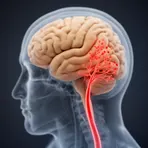
A blood vessel that carries blood to the back part of the brain
- Specialized
A small artery that brings blood to the surface at the back of the temporal lobe

- Specialized
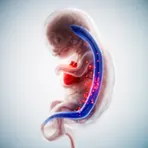
A large vein in an animal embryo that carries blood from the tail and back to the heart
- Specialized
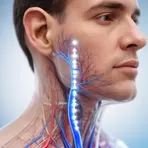
A blood vessel in front of the ear that carries blood from the face toward the neck

- Specialized
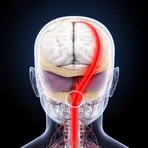
Back part of the spinal cord that receives signals from the body about touch and pain

- Specialized
A blood vessel behind the labia majora that carries blood to the internal pudendal vein
- Specialized
An artery that carries blood to the outer covering of the brain at the back of the skull
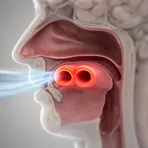
- Specialized
One of the two openings at the back of the nose that leads to the throat

- Specialized
An opening at the back of the nose that leads into the upper throat

- Specialized
A blood vessel that carries blood to the back of the brain near the temples
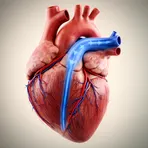
- Specialized
A vein at the back of the left heart that carries used blood from the muscle to a main vein

- Specialized
The back part of the small gland at the base of the brain that sends hormones to control body water
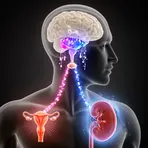
- Specialized
The back part of the gland at the brain base that stores and sends hormones for water balance and childbirth
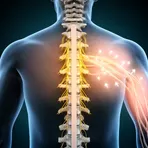
- Specialized
A group of nerves at the back of the spine that carries feeling from the body to the spinal cord

- Specialized
A cloudy area at the back of the eye lens that makes reading and seeing in bright light difficult

- Specialized
The coloured part of the eye sticks to the clear lens behind the pupil after inflammation

- Specialized
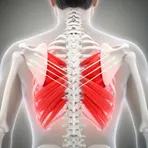
A muscle in the upper back that helps move the ribs when you breathe

- Specialized
A thin lower back muscle that helps hold the lower ribs steady when you breathe


- Specialized
A deep muscle inside the lower leg that helps move the foot and support the arch

- Specialized
A vein that drains blood from the back of the left ventricle into the coronary sinus near the heart tip
Surface Forms
Etymology
Posterior in statistics comes from Latin post meaning 'after', and it sits opposite prior which means 'before'. So the posterior is the probability you have 'after' you see the data, which is why it is called that.