
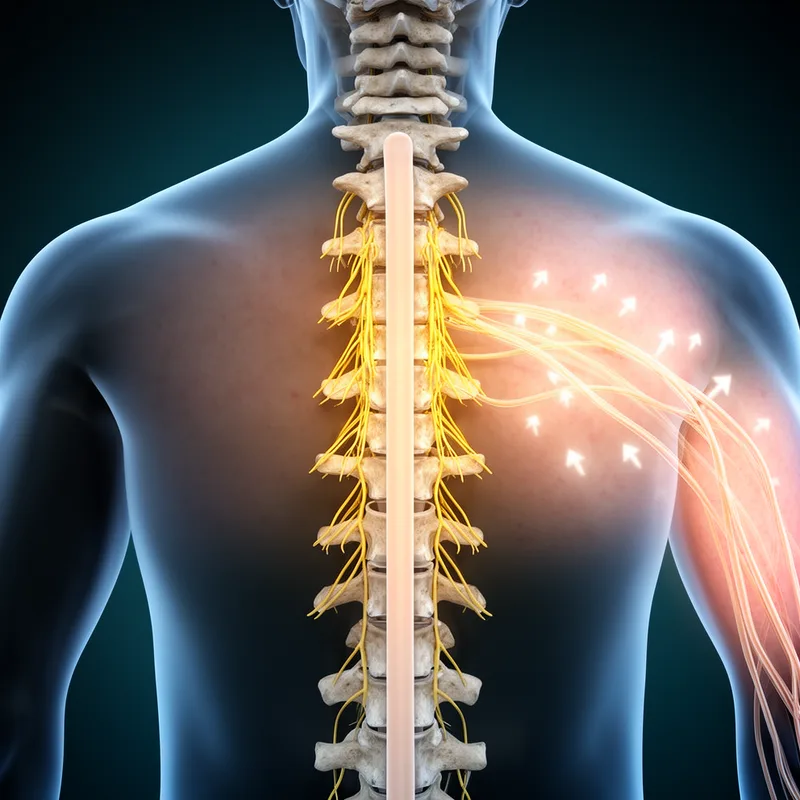
posterior root
- noun
- /ˌpɒstɪˈɒrɪər ruːt/
- Specialized
- In the anatomy lab, we studied the posterior root of the spinal nerve and its role in transmitting sensory information.
- posterior root section
- posterior root of the trigeminal
- selective posterior root
Examples
-
Damage to the posterior root can lead to sensory loss in the affected areas of the body.
-
The surgeon expertly severed the posterior root of the patient's spinal nerve to alleviate pain.
-
PHOTO (COLOR): Figure 2. Rhizotomy of the posterior root of the trigeminal nerve.
Academic text (1996) -
A series of 106 operations of retrolabyrinthine selective posterior root section of the trigeminal nerve for the treatment of trigeminal neuralgia is reported.
Academic text (1996) -
Neurotologists, using the retrolabyrinthine approach, a procedure with which they are well acquainted and for which they are qualified to perform, can selectively section the posterior root of the trigeminal nerve.
Academic text (1996)
Synonyms


 1
8.1
1
8.1
A group of nerve fibers at the back of the spinal cord that carry messages about feeling into it
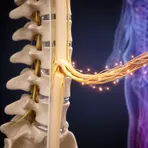
A nerve that comes out of the spinal cord, joins another nerve, and carries messages to and from the body

Groups of nerve fibers that come out of the spinal cord on each side
Surface Forms
Morphology
The phrase literally combines 'posterior' (rear) and 'root' (base/branch), so learners can infer it denotes a rear or back root; this makes the spatial/structural aspect reasonably predictable. However, the precise anatomical sense (a spinal nerve root carrying sensory fibers) is technical and not fully derivable from the everyday 'root' definition given, so full meaning requires domain knowledge.
Etymology
Posterior root combines posterior (meaning 'back') and root (like a plant root that goes into something). It is the nerve root at the back of the spinal cord that carries 'sensory' signals from the body into the cord, so the name helps you remember it brings information into the spinal cord.