

positively charged
 2
5.1
2
5.1

- adjective
- /ˈpɑːzɪtɪvli tʃɑrdʒd/
- Specialized
- A proton is a positively charged particle that plays a key role in the structure of atoms.
- a positively charged proton
Examples
-
Inside the center of each atom, there are positively charged particles known as protons.
-
This slime is positively charged.
-
Here's flat space and let's put a positively charged particle in.
-
Cations are ions that are positively charged, while anions are ions that are negatively charged.
-
And very simply, when positively charged deuterons are attracted to the palladium cathode, they cram together.
-
The antimatter particle that complements the negatively charged electron, for example, is the positively charged positron.
Academic text (1990) -
Electrolytic generators are usually composed of a negatively charged cathode and a positively charged anode made of the metal or an alloy of the metals to be ionized.
Academic text (2001) -
In a battery, the terminals create a flow of positively charged ions to generate electricity.
Synonyms
 27
5.9
27
5.9
Having an electric charge like a proton
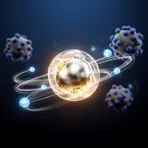
Likely to lose electrons and become positively charged
Antonyms

How Charged
- Specialized
2
5.1

- Specialized
12
5.6
Surface Forms
Morphology
positively + charged
The adjective is transparently built from the modifier 'positively' (in a positive way) applied to 'charged' (carrying electrical charge), so the phrase literally means 'charged in a positive way' = having a positive electric charge. This follows a standard modifier + adjective composition and is cross-linguistically comparable, so a B1 learner who knows the constituent words should be able to derive the meaning.
Etymology
Positively charged gives a clear picture: a tiny object holding extra 'plus' pieces, like a battery on its plus side. The word positive means 'plus' and charged means it carries electricity, so the phrase means 'having a positive electric charge'.