

charged
- adjective
- /tʃɑrdʒd/
- Specialized
- The force on a charged particle is V cross B.
Loading YouTube…
Watch on YouTubeYou've got free electrons, so you've got charged particles moving.
- You've got free electrons, so you've got charged particles moving.
- Again, you can also have charged radiation made of protons.
- So when I'm charged it zaps me right in the ear.
- So I'm way under charged, filled it up immediately.
- So he goes on and and says that substance is charged.
- Neutrons become ions and because they're electrically charged, they can be influenced by magnetic fields.
- A spin, in particular the spin of a charged particle, is a little electromagnet.
Examples
-
The balloon became charged after being rubbed against my hair.
-
It is made-up of charged atoms called ions.
-
So we want to see which particle is getting charged first, OK?
-
So these are charged particles and getting charged by the blast of this radiation.
-
Now I observe the acceleration to the charged particle, OK.
-
You've got free electrons, so you've got charged particles moving.
-
OK, let's say you studied diffusion of charged ions in insulator.
-
Many charged particles are found in a lightning bolt.
-
Scientists study the behavior of charged atoms in various electric fields.
Antonyms


Compounds

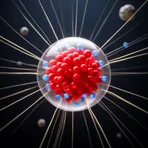

How Charged

Surface Forms
Morphology
Etymology
Charged comes from the verb charge, which meant 'to load' or 'give power'. Just like you 'charge' a phone, a charged object is filled with electric energy that can attract or push other things.