

to plunder
 26
6.0
26
6.0

- verb
- /ˈplʌndər/
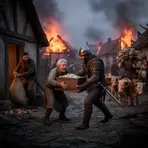
- From their longboats, the Norsemen spread terror as they plundered the continent, the British Isles, and Mediterranean communities.
- soldiers plundering
- plundered other countries
- plundering villages
Loading YouTube…
Watch on YouTubeJust going out of my boats, you know, like plunder some goals.
- Just going out of my boats, you know, like plunder some goals.
Examples
-
Since the Whydah pirates plundered so many different ships, the recovered treasure now provides archaeologists and visitors.
Academic text (2010) -
Insatiable in its need for daily fuel, the burgeoning population of India has plundered its forest resources.
Academic text (1993) -
And these pirates would plunder it.
-
OK, so this is what happens to people who plunder monasteries.
-
Any restaurant was destroyed in the first year; any market was plundered by the soldiers.
Fiction book (1990) -
Thus, when the Vikings set forth to rob and plunder England, they never sailed out of sight of land.
-
Five other shops in the arcade were plundered within minutes of the first.
Fiction book (1991) -
The pirates had killed all 23 crewmembers and plundered the ship.
Academic text (2005) -
One family, the Cartwrights, had their home outside Philadelphia plundered and burned by a patriot mob.
Academic text (1991) -
The invading army began to plunder the villages, taking food and valuables from the frightened residents.
Synonyms
 ∞
1.0
∞
1.0
Take something that does not belong to you without permission
 49
4.2
49
4.2
To steal things from shops during chaos
 43
9.6
43
9.6
To violently damage a place and take its goods
 38
6.3
38
6.3
To search a place roughly and steal things while making a mess
 29
8.1
29
8.1
To steal things by force during war or riots
 14
8.6
14
8.6
To loot and destroy a town or city after capturing it in war
 2
7.6
2
7.6
To attack a place and take valuable things, often destroying it
 2
9.3
2
9.3
Steal valuable things and damage a place or person, often by force
 1
6.1
1
6.1
Damage a place by force and take or destroy its things

 1
9.9
1
9.9
To take things by force from people or places, often as loot during war
Antonyms


How Forceful

Surface Forms
Etymology
Plunder as a verb comes from Low German plundern, which meant 'to take goods', often by soldiers or pirates in a raid. So to plunder is to steal things by force or during war.