
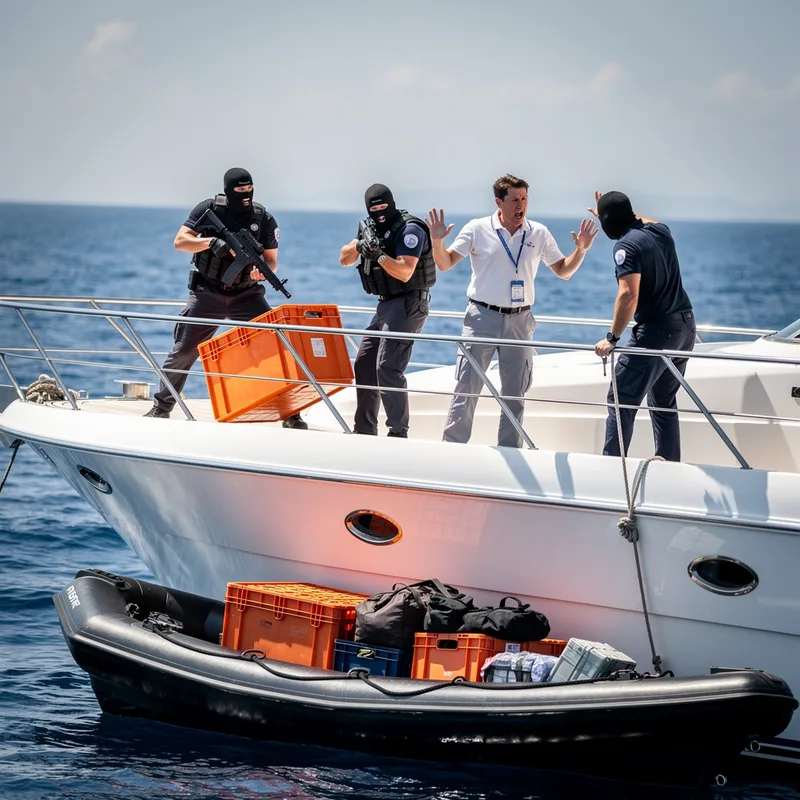
to pirate
 3
5.6
3
5.6

- verb
- /ˈpaɪrɪt/
- The poor gleefully pirate it; the rich access it through institutional licenses.
Examples
-
Then, if several good or popular games are not easily crackable, the pirate might think about buying it before immediately trying to pirate it.
Blog text (18) -
They've been pirating boats for years.
-
There is no need to pirate what is freely given.
Blog text (20) -
It is estimated that between 30% and 40% of all software currently in use is pirated.
Blog text (31) -
Found him on the outskirts of the first shield, pirating supply ships.
-
There are horrible stories of European ships being pirated, and their luckless crews sold into slavery.
Blog text (1) -
While some users will react to caps by signing up, plenty will simply go elsewhere for their free music, perhaps to other legitimate services or perhaps to pirate ones—which is the last thing that either Spotify or the music industry wants.
Blog text (14) -
And so, in order to protect this globally significant resource, the elder Hooker hatched a bold plan to pirate the precious cinchona seeds out of South America to Britain's colonies in Ceylon and India.
Academic text (2018) -
The gang planned to pirate the cargo ship while it was anchored in the bay.
-
They decided to pirate the rival's shipping routes to gain control over the trade.
Synonyms
 ∞
1.0
∞
1.0
Take something that does not belong to you without permission
 125
5.7
125
5.7
To take control of a vehicle or meeting by force, often illegally
 34
8.5
34
8.5
To take control of things like vehicles, buildings or meetings, often without permission for official use


 1
9.9
1
9.9
To take control of a plane by threat or force

To act like a pirate and steal from ships
To take control of a plane or vehicle by force
Antonyms

Compounds







How Forceful

Surface Forms
Etymology
Pirate (to seize) comes from the old sense of pirate as someone who attacks and takes ships or cargo. So to pirate in this sense is to take something by force or unfairly, which is why it can mean seizing a boat, goods, or even data.