
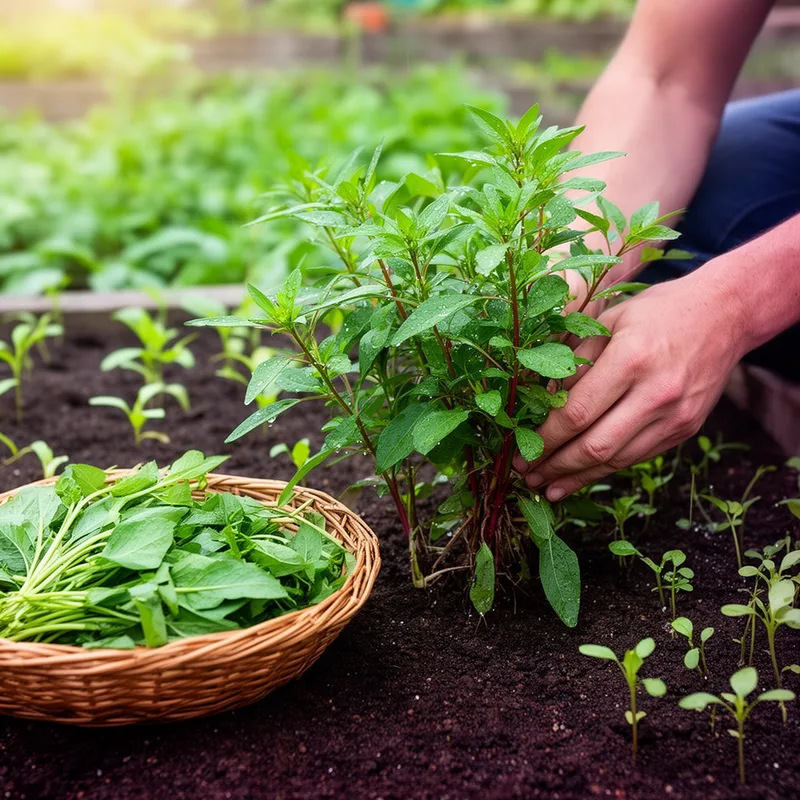
pigweed
 1
7.5
1
7.5

- noun
- /ˈpɪɡˌwiːd/
- US
- The need to weed effectively was the subject of agronomic exhortation by one self-styled progressive but anonymous farmer: "Shall we quail before pigweed, purslane, and plantain?"
- pigweed and ragweed
- pigweed and thistles
- pigweed and lamb's-quarters
Examples
-
And all plants we have shunned: poison hemlock, pigweed, bindweed, stinging nettle, bull thistle.
Academic text (1994) -
"One species, a pigweed called Amaranthus retroflexus, was up to 40 times more effective than others tested in removing radiocesium from soil."
Academic text (2000) -
In desperation, Shirley went down the two steps into the yard and began to pull up pigweed.
Fiction book (1991) -
We walk under fruit-heavy limbs, through johnsongrass and pigweed, then up between rows of Galas.
Fiction book (1999) -
In the Southeast, a "superweed" known as Palmer amaranth pigweed is taking over soybean and cotton fields, often leaving them totally unfit for future cultivation.
Blog text (12) -
Shirley learned that pigweed is often used as a potherb in salads.
-
Farmers often struggle with pigweed, as it can quickly take over their crops.
-
During the summer, many people enjoy picking pigweed for cooking in different dishes.
Synonyms
 1
8.6
1
8.6
A plant with dense green or red flower clusters and edible leaves and seeds
A group of plants with bright flowers and seeds you can eat

A bushy annual plant with white flowers that often grows as a weed

A bushy wild plant that lives one year and has green flowers and seeds with thin flat parts
A European annual plant with greenish flower clusters and small red, berry-like fruits

A bushy plant that lives for one year and has leaves people can eat
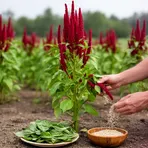
A tall plant with red flower spikes whose leaves people eat and whose seeds people use for food
Compounds
A European annual plant with greenish flower clusters and small red, berry-like fruits
A bushy wild plant that lives one year and has green flowers and seeds with thin flat parts
Surface Forms
Morphology
Etymology
The word pigweed is simply pig + weed, named because pigs often ate or lived among this common wild plant. So pigweed is the name for a common weedy plant that people sometimes eat as a vegetable.