
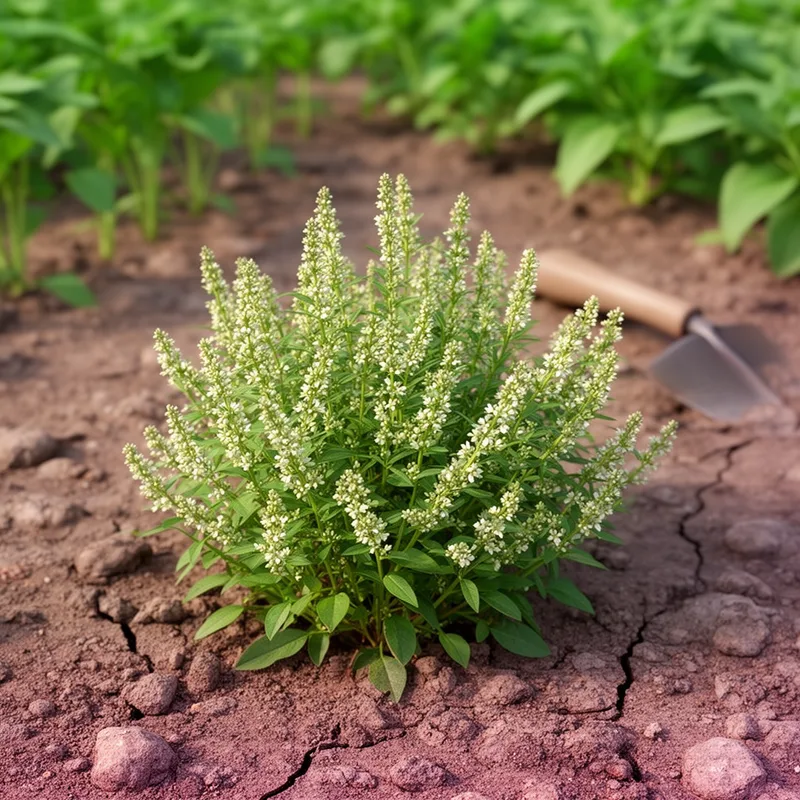
Amaranthus albus
- noun
- Specialized
- The leaves of Amaranthus albus are sometimes used as a food source in certain regions.
Examples
-
Gardeners sometimes remove Amaranthus albus to control weeds in their fields.
-
Farmers sometimes struggle with Amaranthus albus in their fields.
-
Amaranthus albus often grows in disturbed soils across the western United States.
-
The Amaranthus albus is often found in disturbed areas.
-
Amaranthus albus is commonly seen alongside roads and in fields throughout the western United States.
-
Gardeners often find Amaranthus albus growing unexpectedly in their flower beds.
-
In many areas, Amaranthus albus is recognized as a weed that thrives in disturbed soil.
Surface Forms
Morphology
Amaranthus + albus
The compound is a botanical Latin binomial formed from the genus name 'Amaranthus' (a plant) plus the epithet 'albus' (Latin for 'white'), so its meaning is simply the white species of Amaranthus (white pigweed). This composition is directly derivable from the parts and follows regular botanical naming conventions that are transparent across languages, so a learner who knows both constituents can infer the meaning.
Etymology
Amaranthus albus comes from old language roots: Amaranthus comes from Greek meaning 'not fading' (because some amaranth flowers keep their color when dried) and albus is Latin for 'white'. So the name literally says 'white' amaranth and helps you remember this bushy, pale plant often called 'white pigweed'.

