
phonographic


 1
7.2
1
7.2
- adjective
- /ˌfoʊnəˈɡræfɪk/
- Specialized
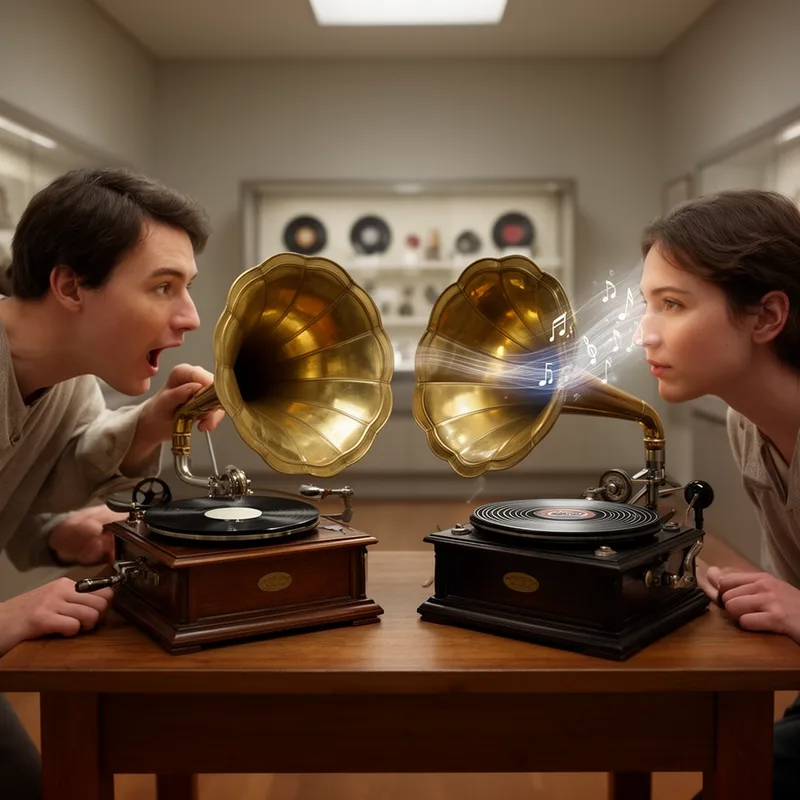
- The phonographic recordings allowed listeners to enjoy music in their homes.
- Phonographic Industry
- Federation of Phonographic
Examples
-
He went on to work with the British Phonographic Industry, International Federation of Phonographic Industries, and BMG.
Blog text (17) -
He went on to work with the British Phonographic Industry, International Federation of Phonographic Industries, and BMG.
Blog text (17) -
Phonographic books that will speak to blind people.
-
If phonographic sound is not considered to be the human voice, may one listen to a phonographic copy of a strange woman's voice?
Academic text (2018) -
If phonographic sound is not considered to be the human voice, may one listen to a phonographic copy of a strange woman's voice?
Academic text (2018) -
"One audience member at Edison's 1877 phonographic demonstration in Washington, D.C., even exclaims that "it sounds more like the devil every time." 20
Academic text (2017) -
After eighteen months of planning, he built a frame for the camera, cannibalized a Hasselblad he had in the studio, replaced its magazine and shutter, and slaved its motor drive to a phonographic turntable.
Academic text (2003) -
The traces of acoustic vibration inscribed on the phonographic plate were, for him, an instance of a representational mode aimed at the synchronization of vital energies rather than the fixing of static images, as in photography.
Academic text (1998) -
Many phonographic devices were designed to enhance the clarity of sound reproduction.
-
Phonographic technology has transformed the way we experience music and audio entertainment.
Synonyms

Sound or music made using both electronic and acoustic instruments
Surface Forms
Morphology
phonographic = phonograph (transparent) = phono + graph + ic
This is a straightforward adjective formation meaning 'relating to a phonograph' or its sound-recording function.
Etymology
Phonographic comes from Greek parts phono- 'sound' and -graph 'write', so it first meant 'sound-writing'. Early machines called phonographs 'wrote' voices onto discs, and that is why phonographic now means 'relating to the recording or playing of sound'.