

paraplegia
 2
7.5
2
7.5

- noun
- /ˌpærəˈpliːdʒə/
- Specialized
- All patients with paraplegia were admitted, while those without were treated as ambulatory outpatients.
- complete paraplegia
- incomplete paraplegia
- person with paraplegia
Examples
-
As a result of the decreased blood flow, individuals with paraplegia may be more susceptible to developing pressure ulcers.
Academic text (1999) -
Among children who were 12 years or younger when injured, approximately two-thirds had paraplegia and a similar proportion had complete lesions.
Academic text (2004) -
Two individuals with tetraplegia and three individuals with paraplegia were included in the study.
Academic text (2000) -
Tuberculosis is the most frequent cause of nontraumatic paraplegia in most parts of Africa.
Academic text (2007) -
The symptoms in this group ranged from sudden onset of lower extremity paresthesia to frank paraplegia.
Academic text (2007) -
Only 24 patients (49%) had satisfactory healing with no persisting spine deformity or paraplegia.
Academic text (2007) -
Prolonged lack of blood supply to the spinal cord can lead to paraplegia.
-
All patients with paraplegia were admitted, while those without were treated as ambulatory outpatients.
-
As a result of the decreased blood flow, individuals with paraplegia may be more susceptible to developing pressure ulcers.
Synonyms
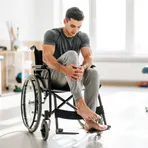 81
5.4
81
5.4
Loss of movement and feeling in all or part of the body
 30
8.4
30
8.4
A condition that makes part of the body weak or unable to move
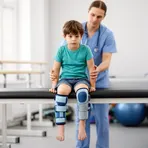
Loss of movement in the same parts on both sides of the body, usually the legs

Loss of movement and feeling in part or all of the body
Antonyms


How Many Limbs
- Specialized
1
8.3

- Specialized
2
7.5
- Specialized
- Specialized
Surface Forms
Morphology
paraplegia = plegia (opaque) = para + pleg + ia
This is a learned medical formation from Greek elements, so an average B1 learner would not be able to infer the meaning from the parts.
Etymology
Paraplegia comes from Greek parts para- meaning 'beside' and -plegia meaning 'paralysis', like in paralysis. So, paraplegia names the condition when the legs and lower half of the body are unable to move.