

paralyzed


 1
4.2
1
4.2
- adjective
- /ˈpærəˌlaɪzd/
- US
- I was single, making good money, but I was paralyzed by fear.
Loading YouTube…
Watch on YouTubeThousands of bargain drinkers become paralyzed, blind or even die.
- Thousands of bargain drinkers become paralyzed, blind or even die.
- So don't be paralyzed by fear of things going wrong.
- How do you move forward when you are paralyzed, you know, when you are addicted?
- So people who have damage to the cerebellum aren't paralyzed, but they tend to be clumsy.
- Now, some people actually experience waking up being fully paralyzed and hallucinating.
- And that's the virtuous consciousness that finds itself paralyzed.
- But even to this day when I feel like I'm stuck, I'm paralyzed.
- Now, when you have that fear of death staring at you, you're paralyzed.
- For not succumbing to the noise, to refusing to be paralyzed by indecision.
- But the, the dynamic in Washington became so, so frozen, so paralyzed.
- and then she says. But I'm paralyzed because
- And I've been completely paralysed from taking that on.
- So like one time a little girl got paralyzed in the situation, right?
Examples
-
This individual was seen as a partially paralyzed individual receiving care in the hospital.
-
For not succumbing to the noise, to refusing to be paralyzed by indecision.
-
Just completely just paralyzed by pain.
-
Often we get paralyzed with perfection.
-
So a stroke on the right might leave you paralyzed on the left.
-
So don't be paralyzed by fear of things going wrong.
-
The sudden noise paralyzed her with fear, leaving her unable to move.
-
After the accident, he was paralyzed from the waist down and required assistance to get around.
-
She felt paralyzed by doubt when it came time to express her opinion during the meeting.
Synonyms
 259
2.3
259
2.3
Having a long-term physical or mental condition that limits movement and daily activities
 243
2.0
243
2.0
Not able to act or protect yourself
 14
4.4
14
4.4
Not able to move or be moved, like a statue
 4
8.0
4
8.0
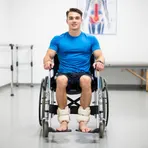
Having no movement or feeling in the lower body because of a spine injury
 3
7.2
3
7.2
Relating to loss of movement in part of the body
 1
9.9
1
9.9
Having muscles that shake or cannot move
 1
2.8
1
2.8
Unable to move because of fear or shock

Relating to or causing a loss of movement in part of the body
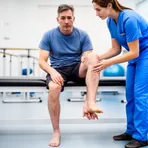
Having partial paralysis that makes movement weak

Having partial loss of movement in both legs

Cannot be moved physically or in opinion

Unable to move or act normally after illness such as an injury
Antonyms

How Paralyzed

Surface Forms
Morphology
Etymology
Paralyzed comes from Greek parts para- meaning 'beside' and lysis meaning 'loosen'. A helpful image is muscles that are so 'loose' they let go and you cannot move or act, so paralyzed means unable to move or act.