
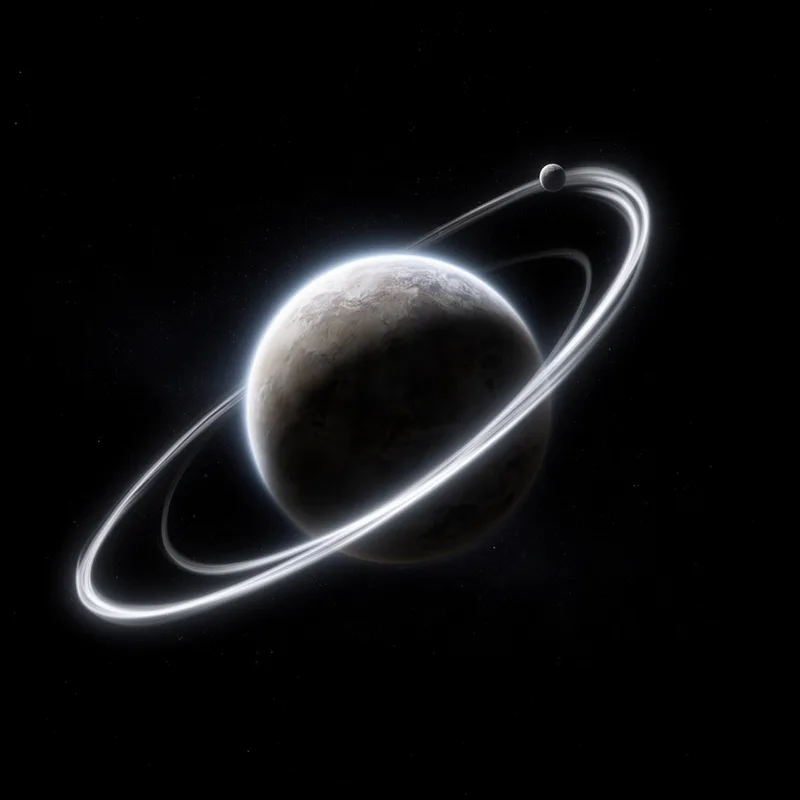
orbit
 302
4.0

- noun
- /ˈɔrbɪt/
- Specialized
- One of our satellites is falling out of orbit.
- Earth orbit
- satellites in orbit
- telescope in orbit
Loading YouTube…
Watch on YouTubeSo you can sustain orbits, however delicate they are.
- So you can sustain orbits, however delicate they are.
- It was a Jupiter inside the orbit of Mercury.
- We think that all of that stuff in the wild orbits is what we call irregular moons.
- There will be scientific research at a much higher level in orbit, commercial scientific research.
- And with that data, you can then work out the orbits of those stars.
- We have Juno in orbit around Jupiter.
- So for decades, rockets that carried their payload into orbit couldn't be reused.
- It's, it's not this orbit, this so.
Examples
-
That takes an hour and a half to change orbit.
-
In your geosynchronous orbit above the planet.
-
We need a man in orbit, or it's all over.
-
And the third thing is that the planet needs to have cleared its orbit around its star.
-
In these systems, the pulsar and a relatively ordinary star orbit around each other.
Academic text (1991) -
The ship crossed the orbit of Mars well ahead of the looming red planet.
Fiction book (1992) -
In October 1957, the Soviet Union launched the world's first artificial satellite, Sputnik 1, into orbit.
-
The satellite entered a stable orbit around the Earth after several adjustments.
-
Scientists study the orbit of Mars to understand its seasonal changes.
-
The asteroid was detected in its elliptical orbit, crossing the path of other celestial bodies.
Synonyms
 13
3.5
One complete turn around a central point, like a planet or wheel

 1
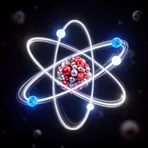
5.5
The path an electron takes around the center of an atom
 1
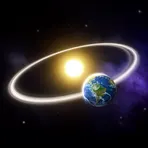
6.5
A path in space that a planet or moon follows around a bigger object such as a star
Compounds
- Specialized
3
6.9
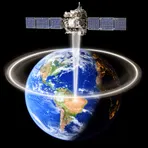
A path around Earth where a satellite goes once every 24 hours and stays above the same place each day
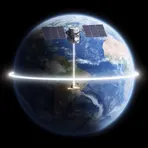
- Specialized
1
6.1
An orbit around Earth where a satellite stays above the same point on the equator

- Specialized
1
6.5
A path in space that a planet or moon follows around a bigger object such as a star

- Specialized
1
9.5
The angle that shows how tilted an orbit is to Earth's path around the Sun

How Far

Surface Forms
Etymology
The word orbit comes from Latin orbis ('circle') and orbita ('path' or 'wheel track'); picture a path made by a wheel going round and round. So an orbit is the curved path a planet, satellite, or electron follows around another object.