

orbit
 5
8.1
5
8.1

- noun
- /ˈɔrbɪt/
- Specialized
- The stems relax; the eyeballs come unmoored; they float in roomy orbits through the sockets.
- eye orbit
- sinuses and orbit
- paranasal sinuses and orbit
Examples
-
The mass also involved the right ethmoid sinuses and the orbit, and it extended intracranially into the frontal lobe.
Academic text (2002) -
Erosion of fungal hyphae into the orbit from the maxillary sinus may produce proptosis.
Academic text (2008) -
Symptoms may not develop until the orbit or skull base becomes involved.
Academic text (2008) -
Fungal involvement of the orbit is not detectable on plain films.
Academic text (2001) -
A large eye orbit is visible in the inch-long skull of an embryo, right?
Academic text (2002) -
The first case showed a dramatic involvement of facial skin and muscles, orbit, and paranasal sinuses.
Academic text (2004) -
Primary epidermoid carcinoma of the orbit results from SCC of the lacrimal gland, which is a rare entity.
Academic text (2008) -
The surgeon examined the orbit to ensure the eye was correctly positioned after the operation.
-
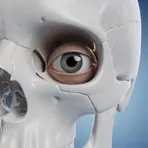
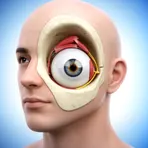
In humans, the orbit is the bony cavity that protects the eyeball and its surrounding tissues.
-
Trauma to the orbit can lead to serious vision problems and requires immediate medical attention.
Synonyms
 14
3.5
14
3.5
A hollow space in the skull that holds the eyeball

 1
6.8
1
6.8
A bony socket in the skull that holds and protects the eye

A bony space in the skull that holds and protects the eye
Compounds
- Specialized
3
6.9
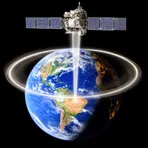
A path around Earth where a satellite goes once every 24 hours and stays above the same place each day

- Specialized
1
6.1
An orbit around Earth where a satellite stays above the same point on the equator

- Specialized
A path in space that a planet or moon follows around a bigger object such as a star


- Specialized
The angle that shows how tilted an orbit is to Earth's path around the Sun

Surface Forms
Etymology
The word orbit comes from Latin orbita ('wheel track') and orbis ('circle'); think of the eye as a round orb resting in a circular hollow like a wheel in its track. So the skull cavity that holds and protects the eyeball is called the orbit.