

open-chain
- adjective
- /ˈoʊpən tʃeɪn/
- Specialized
- Glucose can exist in both open-chain and cyclic forms, depending on the conditions.
Examples
-
Alkanes such as hexane are typical examples of open-chain hydrocarbons.
-
An open-chain compound can react differently than a cyclic one.
-
The scientist explained that the compound was open-chain rather than a ring structure.
-
Why are open-chain molecules important in organic chemistry?
-
Alkanes such as hexane are typical examples of open-chain hydrocarbons.
-
The scientist explained that the compound was open-chain rather than a ring structure.
-
An open-chain molecule can react differently than any cyclic molecule.
Synonyms
 1
9.9
1
9.9

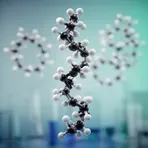
Made of carbon atoms joined in open chains, not in rings
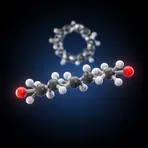
A chain of atoms in a molecule whose ends do not join to make a ring
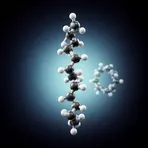
Not forming a ring or closed loop, often describing molecules with open chains
Antonyms
Surface Forms
Morphology
Etymology
Open-chain comes from the simple English words open ('not closed') and chain ('a linked line'). So an open-chain molecule is like a necklace that is not fastened into a circle: its atoms make a line rather than a ring.