

closed-chain
- adjective
- /kloʊzd ʧeɪn/
- Specialized
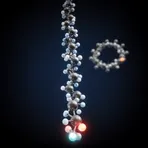
- In organic chemistry, glucose can exist in both an open-chain and a closed-chain form.
Examples
-
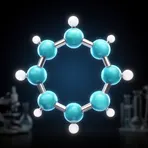
Benzene is a well-known example of a closed-chain hydrocarbon.
-
In organic chemistry, glucose can exist in both an open-chain and a closed-chain form.
-
Researchers synthesized a new closed-chain compound with unique properties.
-
A closed-chain molecule has a cyclic structure.
-
The chemist studied a closed-chain compound.
-
Benzene is a well-known example of a closed-chain hydrocarbon.
-
Researchers synthesized a new closed-chain compound with unique properties.
Synonyms
 1
6.8
1
6.8

Has atoms joined in a ring shape
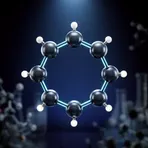
Having atoms joined together to form a ring
Antonyms
Surface Forms
Morphology
Etymology
Closed-chain is easy to remember: closed means 'shut' and chain means 'linked pieces', like a necklace. So a closed-chain molecule is like a necklace with its ends joined into a loop, meaning its atoms form a ring rather than an open line.