
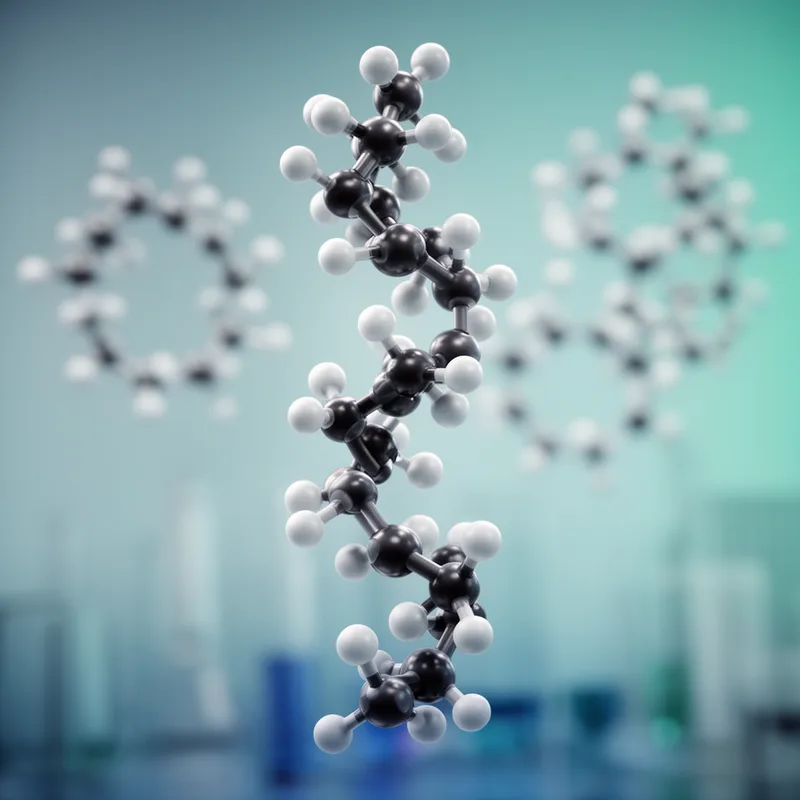
aliphatic
 1
9.9
1
9.9

- adjective
- /ˌælɪˈfætɪk/
- Specialized
- The topcoat, Corothane II, an aliphatic two-component acrylic polyurethane, offered abrasion and impact strength and color and gloss retention.
Examples
-
In the aliphatic region (3.2-0.5 ppm), the results did not indicate any particular trend.
Academic text (2017) -
He demonstrated that natural waxes in a tuber's skin—called phenolic and aliphatic polymers—are needed to form a chemical barrier around wound sites.
Academic text (2003) -
Let's just talk about two aliphatic chains again.
-
And so you've got this long aliphatic tail and the hydrophobic head.
-
Unfortunately, even the resists based on aliphatic groups proved to be highly absorbing at 157 nm.
Academic text (2001) -
Methods of allylic etherification usually involve synthetic procedures due to the need for activation of the starter aliphatic alcohol.
Blog text (1) -
The authors report a breakthrough in the allylic etherification of aliphatic alcohols, the application of which should be substantial, as the team now turns its attention to possible applications in asymmetric synthesis.
Blog text (1) -
0018 As used herein, the term "nitrile" refers to an organic compound having a --CN functional group. Aliphatic nitrites are preferred.
Blog text (26) -
Although the acid-catalyzed deprotection has remained the imaging mechanism of choice, the polymer had to be changed from the aromatic to aliphatic structure for better transparency at 193 nm.
Academic text (2001) -
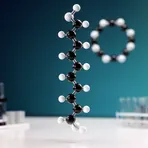
In organic chemistry, aliphatic compounds consist of carbon atoms arranged in straight or branched chains.
Synonyms
 72
3.7
72
3.7
Made from or containing carbon, often found in living things
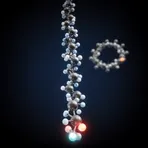
A molecule with a chain of atoms that does not form a ring
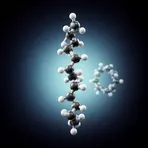
Not forming a ring or closed loop, often describing molecules with open chains
Compounds
- Specialized
A chemical that has carbon atoms in open chains, not rings like benzene
Surface Forms
Morphology
aliphatic = aliphat + ic
A specialised chemical adjective formed from a non-productive combining form ('aliphat-') plus the suffix '-ic'; the components are not recognisable to an average B1 learner and the meaning is technical.
Etymology
The word aliphatic was created by chemists as a contrast to aromatic, so a helpful way to remember it is to think 'not aromatic' and imagine long chains like in fats or lipids. So, aliphatic describes organic compounds with carbon atoms in 'open chains' rather than in 'rings'.