
nucleus
 2
7.5
2
7.5

- noun
- /ˈnjuːkliəs/
- Specialized
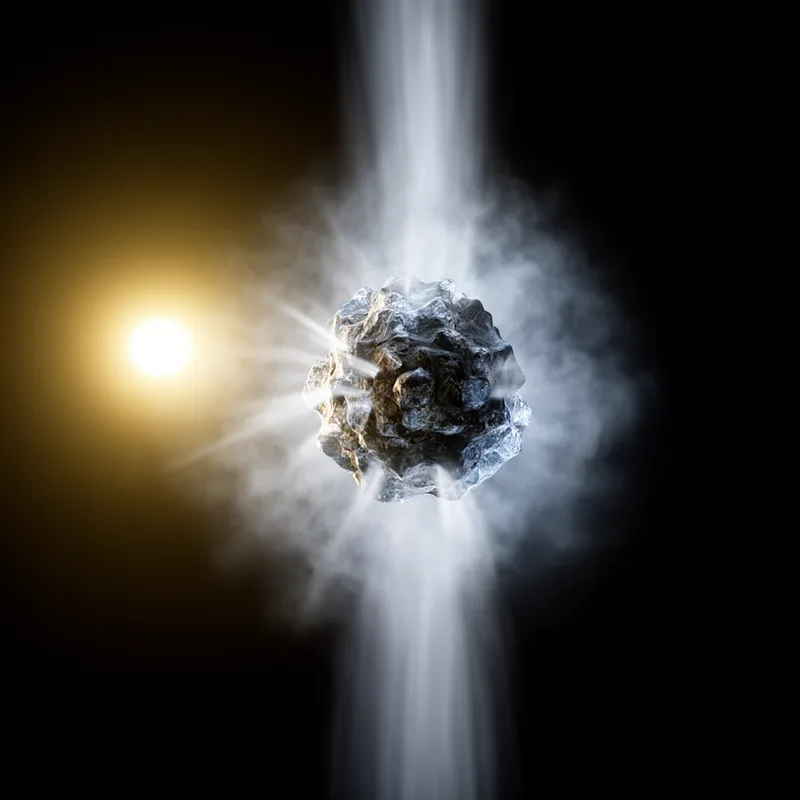
- A paramount goal was the imaging of the nucleus and inner coma from a distance of a few hundred kilometers.
- nucleus of a comet
- nucleus and coma
- jets from the nucleus
Examples
-
Observations of the nucleus began with the recovery of the comet in October 1982.
Academic text (1992) -
A primary goal of the missions was to image the nucleus, and the spacecraft carried camera systems for this purpose.
Academic text (1992) -
An image of the nucleus is shown in the photo below left.
Academic text (1992) -
Other interesting structures, such as extensions and jets near the nucleus, were also found.
Academic text (1991) -
The coma, or cloud of gases surrounding the nucleus, is 20 million kilometers in diameter.
Academic text (1990) -
The density of material in the coma is always greatest near the nucleus, decreasing as you move farther away.
Academic text (1992) -
With an albedo of about 3 percent, the nucleus is one of the darkest objects in the solar system.
Academic text (1992) -
Launched in 1999, this spacecraft will pass within 150 kilometers of Comet Wild 2's nucleus in January 2004.
Academic text (2001) -
Thus, ground-based observations provided little hope of directly probing the nucleus, the source of all cometary phenomena.
Academic text (1992) -
Astronomers monitored the comet's nucleus as its icy core began to vaporize near the Sun.
Compounds


- Specialized
1
3.2
The part of a cell surrounded by a membrane that holds DNA and controls growth and reproduction

- Specialized

 1
9.9
1
9.9
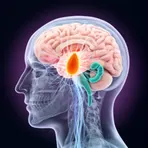
A part inside the brain shaped like a tail that helps control movement and learning


- Specialized
A large folded group of brain cells in the back part of the brain that helps control movement and balance
- Specialized
A small part of the brain shaped like an almond that helps control feelings and motivation


- Specialized
A lens-shaped part of the brain made of gray matter that helps control movements you choose


How Solid

Surface Forms
Etymology
Nucleus comes from the Latin word nux, which means 'nut' or 'kernel'. So a comet's nucleus is the hard 'kernel' at the center that turns to gas and makes the coma and tail when it nears the Sun.