
coma
 5
8.2
5
8.2

- noun
- /ˈkoʊmə/
- Specialized
 :
coma cometaria
:
coma cometaria
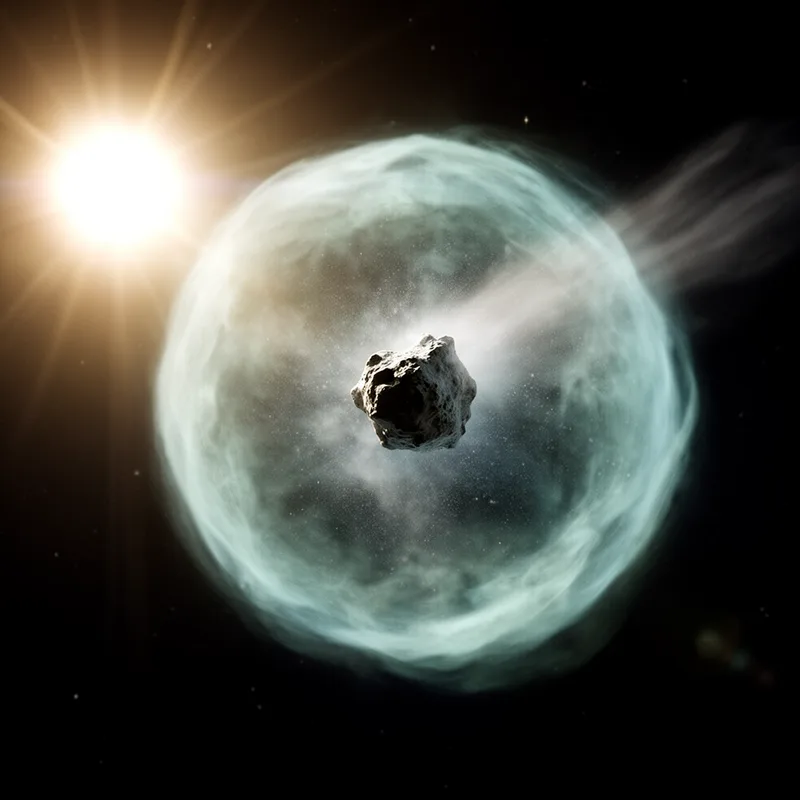
- The coma, or cloud of gases surrounding the nucleus, is 20 million kilometers in diameter.
- nucleus and coma
- coma gas cloud
Examples
-
- Something in the coma of the comet.
-
Photometric measurements determined the brightness of the coma.
Academic text (1992) -
Beyond that, Mumma says, "this tells us that the overall composition of the gas in the coma did not change."
Blog text (6) -
A paramount goal was the imaging of the nucleus and inner coma from a distance of a few hundred kilometers.
Academic text (1992) -
The density of material in the coma is always greatest near the nucleus, decreasing as you move farther away.
Academic text (1992) -
Observations and measurements of the coma, the roughly spherical cloud of dust and gas surrounding the nucleus, were extensive.
Academic text (1992) -
The released gas, carrying with it some of the solid particles that were embedded in the ice, forms the coma, the gas cloud that makes up the "head" of a comet.
Academic text (1992) -
As the comet approaches nearer the Sun, sublimation increases and the coma grows larger, reaching a diameter of 100,000 kilometers or more.
Academic text (1992) -
About 80 percent of the inner coma was found to be water or water-group molecules (H2O, OH, H3O+, H2O+, OH+).
Academic text (1992) -
As the comet approached the sun, its coma began to glow brightly with gas and dust.
Compounds

- Specialized
2
5.0
A state of unconsciousness when blood sugar is very high or very low in a person with diabetes


- Specialized
A very deep unconscious state that happens when severe diabetes is not treated


- Informal
A feeling of being very sleepy after a large holiday meal, often with turkey
How Solid

Surface Forms
Etymology
Coma for a comet's cloud comes from Latin coma meaning 'hair', because the glowing cloud looks like hair around the comet's head, the same idea behind the word comet, which once meant a 'long-haired' star. So the comet's coma is its 'hairy' cloud.