

mythical creature
 4
5.9
4
5.9

- noun
- /ˈmɪθɪkəl ˈkriːtʃər/
- The museum's exhibit showcased various mythical creatures, including griffins and mermaids from ancient tales.
- gods and mythical creatures
Loading YouTube…
Watch on YouTubeAnd lucky for the two of them, there's a competition going on where there's this mythical creature in the woods.
- And lucky for the two of them, there's a competition going on where there's this mythical creature in the woods.
Examples
-
They called one group centaurs, after the mythical creature that's half human and half horse.
-
Bilbo encounters all sorts of mythical creatures on his journey: dwarves, elves, goblins, trolls, and dragons, among others.
Blog text (15) -
Do you think such a mythical creature could possibly exist?
-
Hmm, I thought you were a mythical creature?
-
I have not met him; he remains an almost mythical creature.
Fiction book (1999) -
Unicorns are a mythical creature that do not have wings.
-
Unlike certain other mythical creatures, the griffin has never gained acceptance as a suitable domestic companion.
Fiction book (1995) -
They remind us of mythical creatures from another age and challenge our preconceptions of nature.
Blog text (11) -
The volumes focus on different gods, giants, and mythical creatures, as well as some humans; their stories form pieces of the larger account of Norse mythology.
Academic text (2018) -
Other mythical creatures—for example, giants—commonly form distinct contrasts to the more human-looking gods.
Academic text (2018)
Synonyms
 417
2.7
417
2.7
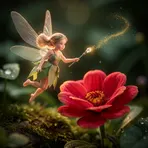
A small imagined being that looks like a person and has magic
 105
8.3
105
8.3
A small, ugly creature that causes trouble for people
 87
5.5
87
5.5
A white horse with one long horn on its forehead that appears in stories
 24
9.9
24
9.9
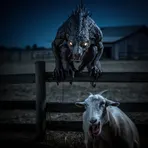
A creature said to attack and drink the blood of animals like goats
 16
9.5
16
9.5
A large hairy creature like a human said to live in the Himalayan mountains
 10
9.9
10
9.9
A large sea monster mentioned in the Bible that shows great danger
 5
9.9
5
9.9
A magical being like a fairy in stories and legends
 5
8.0
5
8.0
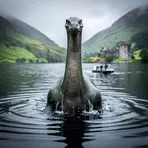
A large, famous creature like a long-necked animal that people say lives in Loch Ness, Scotland
 5
9.9
5
9.9
A large animal that people say lives in Loch Ness, Scotland
 4
8.1
4
8.1
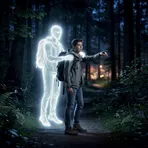
A being like a ghost or spirit that can affect people
 3
9.9
3
9.9
A small magical creature that looks like a tiny person with wings and often plays tricks
 2
9.9
2
9.9
A creature from stories with a man's head, a lion's body, and a scorpion tail
 1
6.5
1
6.5
A made-up creature from old stories or folk tales
 1
7.0
1
7.0
A made-up animal or being from old stories that people often say is real


 1
5.8
1
5.8
A character from traditional stories who has magical powers
 1
8.1
1
8.1
A frightening creature from stories or legends that is not real
 1
9.9
1
9.9
A creature that is part human and part dog seen in stories
A made-up being that exists only in stories or imagination

A creature that people imagine and that is not real

An animal that only appears in stories and myths, not in real life
How Mythical
4
8.1

- Literature
1
7.0
4
5.9
- Literature
Surface Forms
Morphology
The noun phrase's meaning is directly and transparently derived from combining 'mythical' (relating to myths/traditional stories) with 'creature' (an animal or imaginary being). This standard adjective+noun composition is cross-linguistically common, so a B1 learner who knows both constituents will readily infer the MWE meaning.
Etymology
The noun mythical creature comes from old myths, the short stories people told about gods, monsters, or magic, and from the word creature, meaning a living being. So the phrase now means an 'imaginary being' from legend.