

monomorphic
- adjective
- /ˌmɒnəˈmɔrfɪk/
- Specialized
- However, the lymphoma typically features cytologic atypia and monomorphic cells.
- monomorphic adenoma
- monomorphic cells
Examples
-
In this study, we focused on a monomorphic population of bacteria that displayed uniform characteristics.
-
The cells were relatively monomorphic.
Academic text (2006) -
In total, 115 bands were obtained, of which 100 bands (87.0%) were polymorphic and 15 bands (13.0%) were monomorphic.
Academic text (2014) -
The histologic appearance of these tumors can vary considerably, but most masses are made up primarily of a monomorphic population of small spindle cells that are usually arranged in fascicles in a herringbone pattern.
Academic text (2006) -
The species is monomorphic, with all individuals exhibiting the same coloration and size.
-
The research indicated that the monomorphic traits of the plants result in a consistent appearance throughout the population.
Synonyms
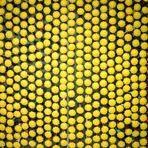
 20
6.6
20
6.6

Made of people or things that are all the same
 4
5.9
4
5.9
Made of parts that are all the same or very similar, for example people in a group


 1
9.9
1
9.9
Having the same shape or parts
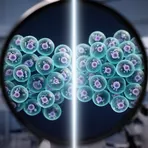
Being the same or very similar in shape and structure, like cells

Having parts that are all the same kind
Antonyms

- Specialized
1
8.9
Having many different forms, like minerals or animals with different looks
How Many Forms

Surface Forms
Morphology
monomorphic = morphic (transparent) = mono + morph + ic
The meaning follows directly from adding mono- 'one' to 'morphic', giving the sense of having only one form.
Etymology
Monomorphic comes from the Greek parts mono- meaning 'one' and morph meaning 'form' or 'shape', so it literally means 'one form'. That's why in biology a monomorphic species has all its members with the same shape or appearance.