
morphic


 1
8.2
1
8.2
- adjective
- /ˈmɔrfɪk/
- Specialized
- Sheldrake's morphic resonance theory (as applied to humans) and Jung's concept of the collective unconscious are very similar ideas.
- morphic field
Loading YouTube…
Watch on YouTubeYeah, the group collective mind, Rupert Sheldrake would call it a bit like the morphic field and that all species have a group field.
- Yeah, the group collective mind, Rupert Sheldrake would call it a bit like the morphic field and that all species have a group field.
- But the morphic resonance aspect of psychedelics is this.
- I, I think if you know, in principle, no morphic computing should be amazing.
Examples
-
Rupert Sheldrake described morphic fields as a source of cumulative memory based on experiences of that species in the past.
Academic text (1993) -
Since morphic fields span time, they contain everything that has been important to human experience.
Academic text (1993) -
If morphic fields exist, and if she tapped into one, her conclusions would be correct.
Academic text (1993) -
But the Self as an archetype is part of a collective unconscious that can be considered a morphic field.
Academic text (1993) -
The indigenous mystic is a shaman, and there seems to be a particular morphic field that an initiate into shamanic practice enters.
Academic text (1993) -
Research in biology often explores how morphic structures influence the development of various organisms.
-
In linguistics, the term 'morphic' is used to describe the form and structure of words in a given language.
-
The scientist proposed a theory based on morphic principles, suggesting that forms are influenced by previous iterations.
Synonyms
 2
7.3
2
7.3
How living things get their shape and parts
 1
8.3
1
8.3
Relating to the shape and structure of land and living things

About the shape or arrangement of something
Surface Forms
Morphology
morphic = morph (transparent) = morph + ic
The suffix '-ic' is commonly used to form adjectives meaning 'relating to' or 'characterized by'.
Etymology
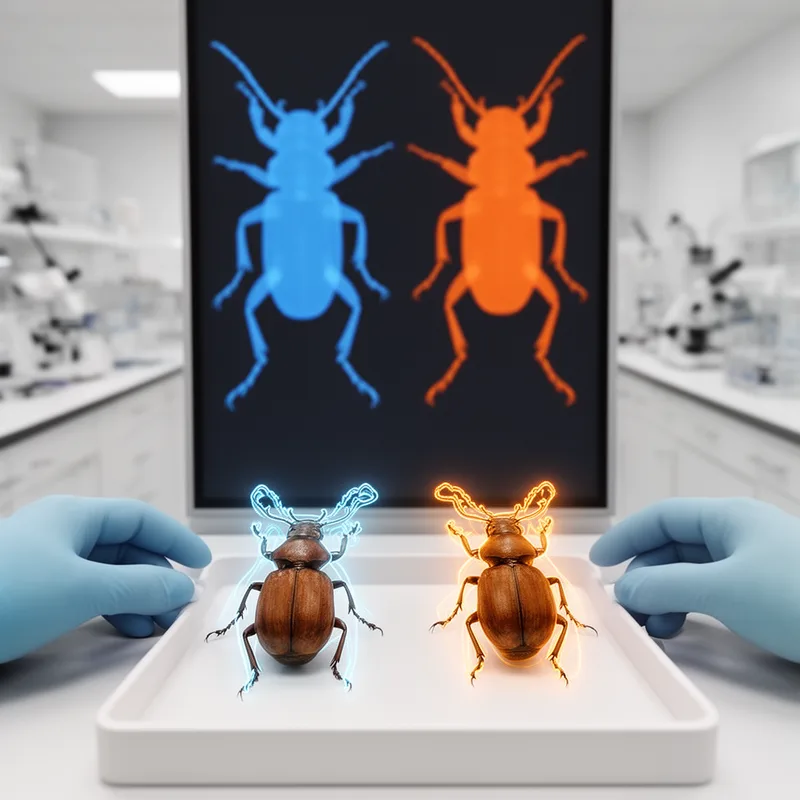
Morphic comes from the old Greek root morph meaning 'form', the same root in the word metamorphosis ('change of form') and in the common verb morph ('to change shape'). So, morphic describes things about shape or structure, which is why scientists and language experts use it when they talk about forms and patterns.