

melanism
- noun
- /ˈmɛləˌnɪzəm/
- Specialized
- The study examined how melanism affects the survival of certain species in their natural habitats by providing better heat regulation.
Loading YouTube…
Watch on YouTubeIt could be a whale shark or a great white shark with melanism.
- It could be a whale shark or a great white shark with melanism.
Examples
-
Several now-classic demonstrations of selection in the wild were published between 1950 and 1975, most notably the case of industrial melanism in peppered moths (Kettlewell 1973).
Academic text (2007) -
As late as the 1970s, however, industrial melanism remained the primary example of selection in action.
Academic text (2007) -
This black, wolf-like dog suggests very strongly the hybrid origin of melanism in wolves, and that the Florida black wolf was actually part of Canis lupus, along with the dog.
Blog text (32) -
Melanism is observed in some species of animals, leading to darker fur or skin coloration, often melanism enhancing their camouflage.
-
Certain reptiles exhibit melanism, which can provide advantages in specific environmental conditions, like increased solar absorption.
Synonyms
 1
7.7
1
7.7

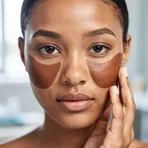
Skin that becomes darker in some areas because it has more colour, often after sun, injury, or illness
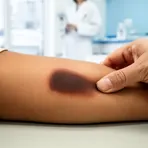
Dark skin in an area caused by extra melanin
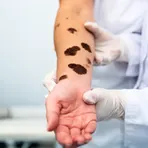
Dark patches that form when the body stores extra pigment, often on the skin

Darkening of skin or an insect shell when it gets more pigment
Antonyms

- Specialized
3
7.0
A condition present at birth in which the skin, hair, and eyes lack color

- Specialized

 1
8.8
1
8.8
A part of the skin that is lighter than normal because it has less color
How Dark

Surface Forms
Morphology
Etymology
Melanism comes from an old Greek word melas meaning 'black', and it is related to melanin, the dark pigment in skin, fur, and feathers. So melanism means an unusual dark colour caused by extra melanin, as you see in a black panther.