
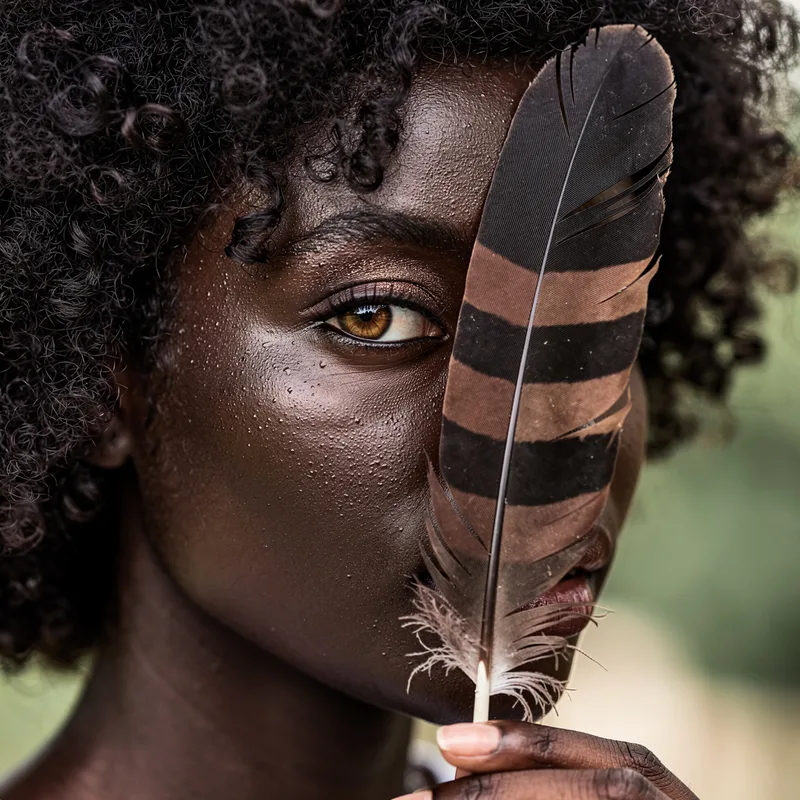
melanin
 7
4.2
7
4.2

- noun
- /ˈmɛləˌnɪn/
- Specialized
- And so there's some cells in your skin called melanocytes that produce more melanin when UV rays hit your skin.
- melanin in skin
- melanin pigment
- melanin production
Loading YouTube…
Watch on YouTubeI was bone white, no melanin in my skin, big birthmark up the back of my leg.
- I was bone white, no melanin in my skin, big birthmark up the back of my leg.
- So humans obviously have different skin tones just genetically because of the amount of melanin in one skin depending on genetic background.
- That pathway, the melanin pathway is from tyrosine, which is the precursor to dopamine and also to melanin production in the fur.
- We have not just stem cells, but we have cells that give rise to the pigment of the hair that create what's called melanin.
- OK, you should wear SPF every day, whatever your melanin levels, cancer being the primary cause, but other aesthetics as well.
- So we are are using melanin's powers against it.
- He's degraded her race and her melanin, but he hasn't degraded her looks.
- My fellow melanin holders let me know what's going on.
- She's where she is despite the inherent biases, because of her melanin and because of her estrogen.
- Just want a little bit of that over fragrance is my melanin gets leather.
- Don't let your feelings of estrogen or melanin prohibit you from thinking she can win.
- I mean, we briefly touched on like melanin's properties as a detox system, let's say.
- I mean, you know, just by his very nature, he was, he was he by his melanin level, he was confrontational.
- I think that's why it worked and that's why people of various melanin shades went to go see it, because it didn't feel that way.
Examples
-
In the Nordic regions, less melanin was produced to deal with colder, less sun-filled weather conditions.
Blog text (3) -
Dark skin has a higher quantity of the skin pigment melanin, as compared to fair skin.
Blog text (16) -
I pointed out that he and I had different levels of melanin in our skin.
Fiction book (1994) -
But you can see in this section here, all of those cells completely packed full of lots and lots of melanin granules.
-
The reason they appear is that the skin produces melanin, a pigmentation, when exposed to the sun.
Blog text (15) -
The more melanin, the greater one's resistance to the sun's rays.
Fiction book (1994) -
And in the tropics, you need a lot of melanin in your skin to keep UVB radiation out.
-
Albinism only affects the production of melanin, while leucism prevents the formation of all pigments.
Blog text (7) -
Many specimens demonstrate basal layer cells with an ovoid shape and cytoplasm with melanin granules.
Academic text (2001) -
The deepest layer holds the brown-to-black pigment melanin, the substance responsible for tanning in humans.
Surface Forms
Morphology
melanin = melan (semi-transparent) = melan + in
Formed from the combining form 'melan-' (black/pigment) plus the chemical/biological suffix '-in'; the relation to pigment is meaningful but technical and not obvious to average learners.
Etymology
Melanin comes from the Greek root melan- meaning 'black' and the ending -in which names a natural substance. So melanin is the natural 'black' pigment that makes skin, hair, feathers, and eyes darker.